
Age-Restricted Products on Shopify: A Guide to Sales Policies

Selling age-restricted products on Shopify comes with stricter legal and payment requirements than most eCommerce categories. Merchants selling alcohol, vape products, CBD, adult items, or regulated tools must comply with both local laws and Shopify platform policies.
| What you’ll learn in this article: ● What Are Age-Restricted Products? ● Common Types of Age-Restricted Products ● Age Restricted Sales Policy Explained ● Best Practices for Selling Age-Restricted Products Online ● Top Age-Restricted Products Shopify Store Examples |
What Are Age-Restricted Products?
Age-restricted products include items that businesses cannot legally sell to minors. Governments apply these rules to products such as alcohol, tobacco, vape devices, adult items, and some medications.
Many countries also require stores to verify customer age before completing a purchase. As a result, eCommerce businesses must follow local regulations and create clear compliance policies.
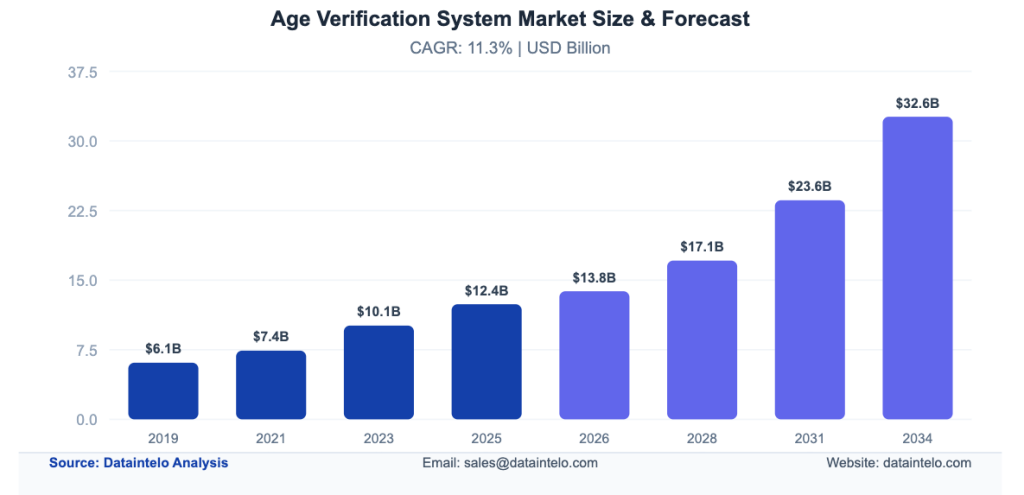
Online stores face even stricter scrutiny today. With the global adult products market valued at US 85.21 billion in 2026 and projected to grow rapidly, and the age verification system market reaching USD 12.4 billion in 2025, brands that sell age-restricted products often use age verification tools, warning pop-ups, and restricted shipping rules to reduce legal risks.
Common Types of Age-Restricted Products on Shopify
Age restrictions vary by country, but certain product categories consistently require verification across most markets. Governments classify these items as high-risk for minors, so businesses must understand each category before selling online.
| Category | Minimum Age (US) | Shopify Restrictions |
|---|---|---|
| Alcohol | 21+ | Allowed with third-party payment gateway and local compliance |
| Tobacco & Vape | 21+ | Shopify Payments prohibited; additional state restrictions apply |
| Cannabis / CBD | Varies by state | Highly restricted depending on region, payment provider, and fulfillment market |
| Adult Content & Products | 18+ | Allowed with content restrictions and compliant payment providers |
| Firearms & Ammunition | 18+ / 21+ | Shopify heavily restricts firearm and weapon-related sales |
| Gambling & Lottery | 18–21+ | Often restricted depending on jurisdiction and payment processor |
| OTC Medications | 18+ for select products | Certain medications may face regional compliance restrictions |
Shopify’s Managed Markets policy also applies additional restrictions on categories such as CBD, alcohol, and weapons for cross-border orders.
Can Shopify Stores Sell Age-restricted Products?
Yes, Shopify allows merchants to sell age-restricted products, but the platform sets clear conditions on how to do so.
Shopify’s Acceptable Use Policy places full legal responsibility on the merchant. Store owners commit to understanding and following the applicable laws of every market they enter and every product category they sell. Shopify does not manage compliance on their behalf.
To sell age-restricted products on Shopify, merchants must meet two key requirements:
- Implement a proper age verification system that confirms users are above the legal age before purchase.
- Use a third-party payment gateway, as Shopify Payments prohibits all age-restricted and regulated products.
Beyond these two conditions, merchants must also follow specific rules for each Shopify sales channel they use. Failing to do so can result in product removal or account restrictions.
Why Age Restrictions Matter in eCommerce
In a physical store, a cashier can check an ID on the spot. Online, no one stands between a minor and the checkout button. Age restrictions apply whether the retailer sells products in person or online, and it is impossible to shift blame to third parties such as delivery services. The retailer bears full responsibility for implementing age verification mechanisms.
The stakes are high across three areas:
Legal liability
Selling age-restricted products to a minor can result in penalties ranging from fines to license revocation. For instance, the fine for selling alcohol to a minor in the US can reach up to $20,000 per occurrence, not counting potential legal fees or court costs.
Financial risk
According to a study by Juniper Research, payment fraud led to $44 billion in losses in 2024, and that number is expected to more than double to $100 billion by 2029. Age-restricted eCommerce stores are among the most exposed, as weak verification systems attract fraudulent transactions.
Reputational damage
Not having proper means to restrict age-limited content and products to children can seriously damage an organization’s reputation, hurting customer loyalty and acquisition in the long run.
Compliance pressure is also growing fast. Businesses that cannot demonstrate compliance are finding themselves exposed to fines running into the hundreds of millions, reputational damage that is difficult to recover from, and in some jurisdictions, criminal liability for senior managers.
Age Restricted Shopify Sales Policy Explained for Businesses
A Shopify age restricted sales policy is a set of rules and compliance measures that merchants use to legally sell adult-only products through their Shopify store.
For Shopify merchants, an age restricted sales policy is not just a legal safeguard. It also defines how age verification, checkout restrictions, delivery controls, and marketing rules should function throughout the customer journey.
A compliant Shopify age restricted sales policy typically covers four key areas:
- Minimum age requirements by product and market: Age restrictions vary by country and state. Shopify stores selling internationally must adapt product availability and checkout rules.
- Accepted age verification methods: Simple checkboxes or self-confirmation prompts are often insufficient for high-risk categories. Many merchants use Shopify-compatible age verification apps or third-party ID verification systems.
- Payment and delivery restrictions: Shopify Payments does not support many regulated categories, including alcohol, vape, and certain CBD products. Merchants often need third-party payment gateways and adult-signature delivery services to complete orders legally.
- Advertising and marketing compliance: Stores selling age-restricted products must limit exposure to underage audiences.
Best Practices for Selling Age-Restricted Products Online
Selling age-restricted products on Shopify requires more than adding a simple popup before checkout. Merchants need a setup that combines age verification, payment compliance, delivery controls, and market restrictions together.
Use a Shopify Age Verification App
Relying on a purchaser confirming their age, asking for a date of birth, or using tick boxes are unlikely to satisfy due diligence requirements. Regulators increasingly expect merchants to implement robust, automated age gates rather than relying on self-reported information alone.
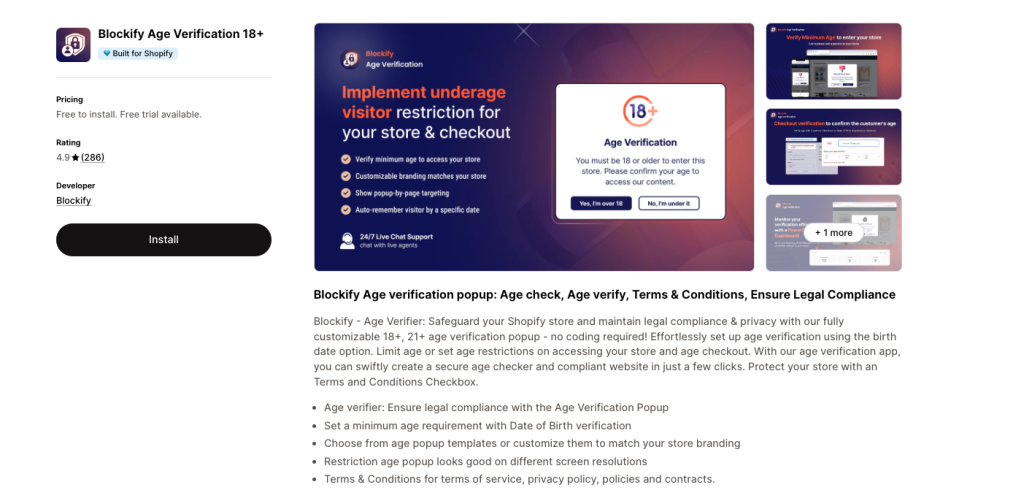
For Shopify merchants, dedicated age verification apps integrate directly into the checkout flow without requiring custom development. Blockify Age Verification is one of the top-rated options on the Shopify App Store, offering customizable 18+ and 21+ popups, birthdate verification, and geo-based restrictions with no coding required.
Place Verification at the Right Point in the Funnel
For stores that sell only restricted products, placing an age gate on the homepage is usually the safest approach. For mixed-product stores, verification can appear on specific product pages or before checkout instead.
Adding verification too early may hurt conversions, while adding it too late can interrupt completed purchases.
Build Geo-Based Rules Into the Store
Age restriction laws vary across states and countries. Shopify merchants selling internationally should block restricted products in unsupported regions and apply market-specific rules where needed.
Geo-based restrictions help reduce compliance risks and prevent accidental cross-border violations.
Use Compliant Payment and Delivery Methods
Shopify Payments does not support many regulated categories, including alcohol, vape, and some CBD products. Merchants often need third-party payment gateways for these businesses.
For delivery, many stores also require adult signature confirmation and government-issued ID checks upon arrival.
Maintain Clear Policy and Compliance Records
Stores should clearly display age restriction notices, terms, and shipping policies throughout the site. Keeping verification logs and compliance records can also help protect the business during audits or disputes.
Top Age-Restricted Products Shopify Store Examples
The following five stores are among the most notable Shopify merchants operating in age-restricted categories. Store data is sourced from Similarweb, public financial disclosures, and platform announcements.
Flaviar
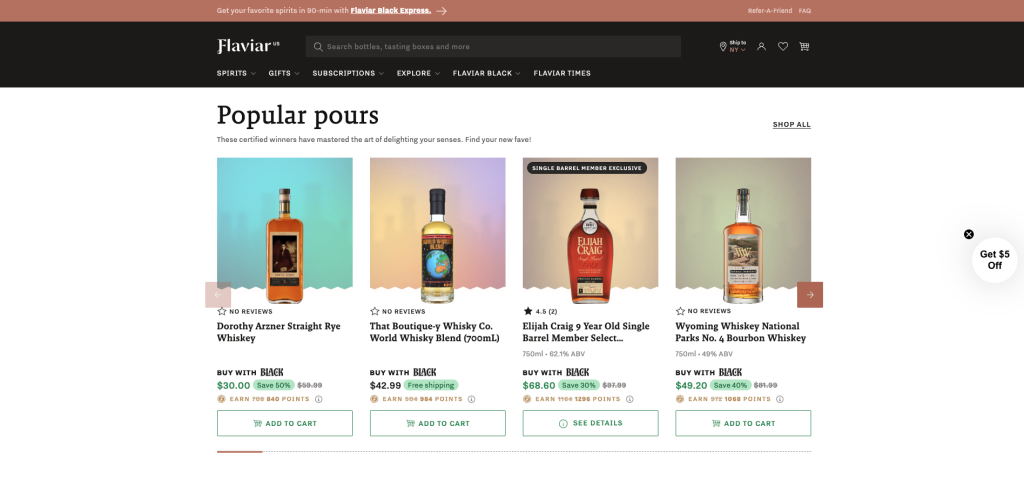
One strong example of an age-restricted Shopify store is Flaviar. The brand sells curated tasting boxes, premium liquor, and limited bottle releases while maintaining age verification throughout the shopping experience. Its setup shows how alcohol brands can balance compliance requirements with a polished subscription-driven storefront.
- Spirits and alcohol category (21+ verification required)
- Membership-driven DTC model with subscription revenue
- Shopify Plus with Flaviar Pay as the compliant payment solution
- Approximately 268,700 monthly visits
Caskers
Caskers is a premium spirits marketplace running on Shopify, specializing in whiskey, bourbon, and hard-to-find limited edition bottles across the US. The store operates as a subsidiary of Flaviar and ranks among the closest direct competitors in the online spirits space, drawing approximately 248,600 monthly visits as of July 2024. The store requires legal drinking age confirmation at site entry and mandates an adult signature with ID check at delivery.
- Premium spirits and whiskey (21+ verification required)
- Marketplace model connecting buyers with licensed retailers, no inventory held
- Shopify store with third-party payment gateway
- Age gate at site entry plus ID verification at delivery point

Wooden Cork
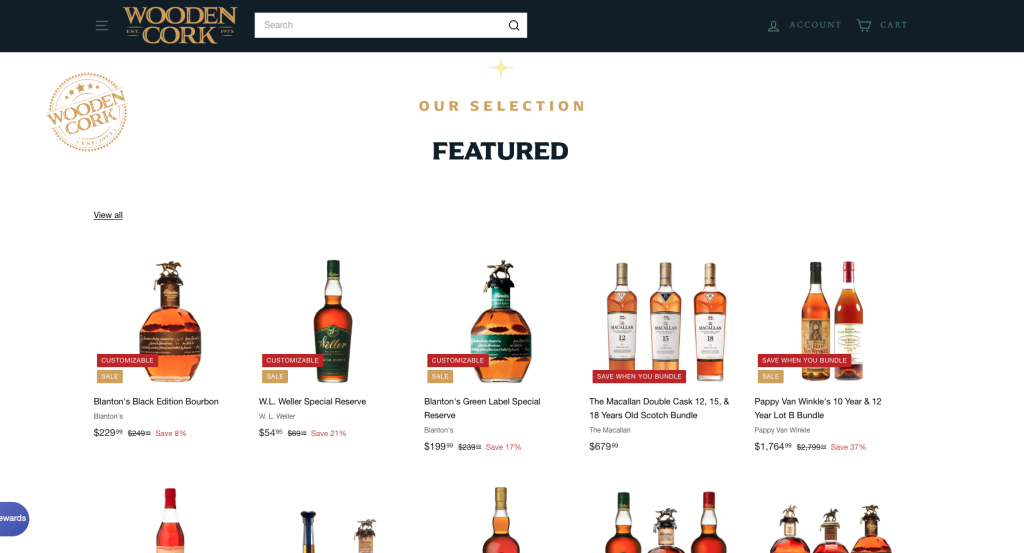
This store is an online liquor retailer with over 40 years of industry experience, running on Shopify and shipping nationwide across the US. Wooden Cork requires customers to acknowledge they are 21 or older when adding products to cart and mandates a valid government-issued ID at the time of delivery. If no valid ID is presented, the order cannot be delivered.
- Alcohol, spirits, and cigars (21+ verification required)
- Geo-based shipping rules blocking sales to restricted states
- Age acknowledgment at product level and checkout
- Adult signature with ID check required at delivery
Leatherman
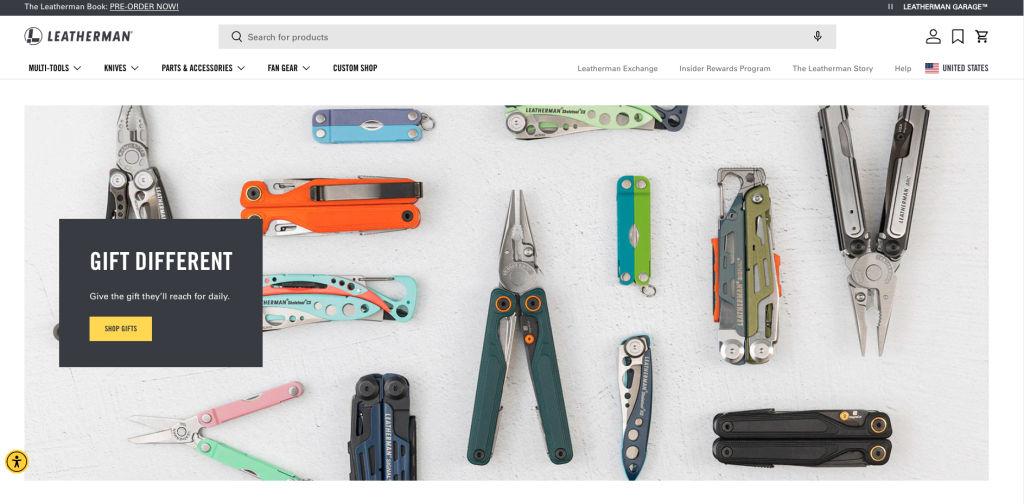
Leatherman sells multi-tools and knives globally through its Shopify-powered store. While not all its products are age-restricted, bladed items require age verification under UK law and similar regulations in several EU markets. Leatherman UK implemented a custom integration with AgeChecked that required customers to verify their age before proceeding to the Shopify checkout.
- Multi-tools and bladed products (18+ under UK Offensive Weapons Act)
- Global Shopify store with geo-specific age verification triggered for restricted markets
- Custom AgeChecked integration at pre-checkout stage
- Strong organic and direct traffic driven by brand authority built since 1983
FAQs About Age-Restricted Products
Selling age-restricted products online raises questions that go beyond basic setup. Below are answers to the most common questions merchants ask before launching or scaling a compliant store.
What qualifies as an age-restricted product?
Any product that a business cannot legally sell to individuals below a government-defined minimum age. These restrictions exist to protect public health and safety by limiting access to items that can be harmful, addictive, or inappropriate.
How do online stores verify customer age?
A compliant solution must accept an ID document, identify the age on the document, and verify that the website visitor is the actual owner of that ID. Most merchants combine a checkout age gate with a third-party ID verification service and delivery-point confirmation.
What happens if a business violates an age restricted sales policy?
Consequences stack across multiple levels. Violations can result in substantial fines, civil lawsuits, and criminal charges. On Shopify specifically, repeated or severe infractions can result in permanent store closure, with the seller losing access to their account, inventory, and customer base.
Conclusion
Selling age-restricted products online is a legitimate and growing business opportunity, but it comes with a layer of legal, operational, and platform-specific responsibility that most eCommerce categories do not require.
The regulatory landscape continues to tighten. More US states are mandating document-level verification. Businesses that treat compliance as a one-time setup rather than an ongoing system will find themselves exposed as enforcement catches up with eCommerce growth.
