
Firearm eCommerce: What You Can (and Cannot) Sell on Shopify

Firearm eCommerce keeps growing, but not every platform supports it equally. Shopify is one of the most popular eCommerce platforms, yet its rules around firearms often confuse new sellers.
What Is Firearm eCommerce?
Firearm eCommerce describes the business of selling firearm-related goods through online storefronts. On the surface, it looks like any other digital retail category. In reality, it operates under far tighter scrutiny because product eligibility, payment access, shipping rules, and platform approval do not follow the same standards as mainstream eCommerce.
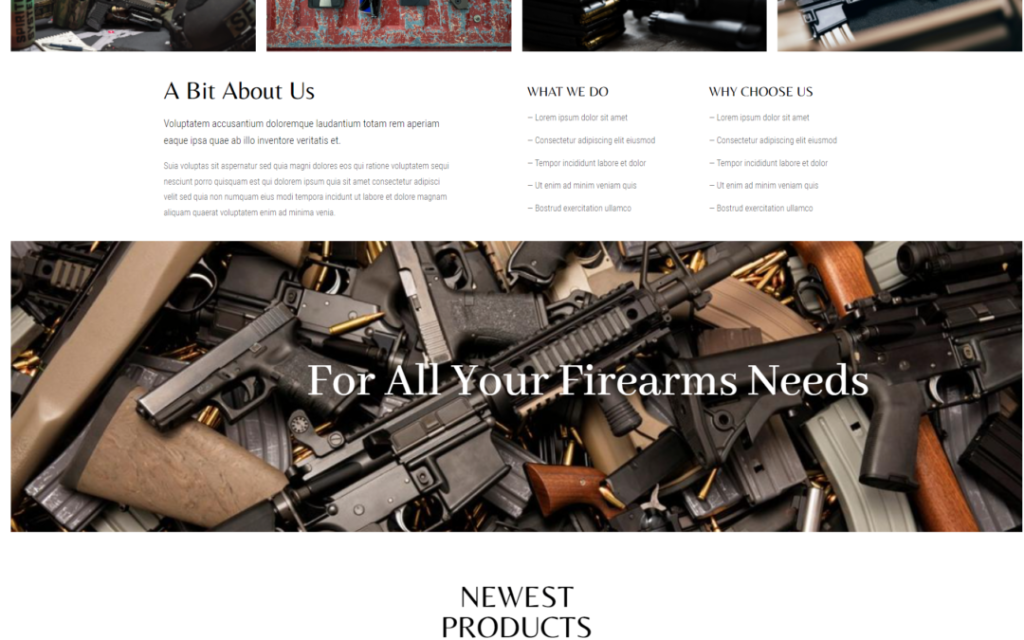
The scale of this market is hard to ignore. As of May 2026, there are 787 live Shopify stores in the Firearms & Weapons category alone, with 67% based in the United States. The category skews heavily toward established retailers, nearly 30% of stores carry over 250 SKUs, and a significant share run catalogues exceeding 1,000 products.
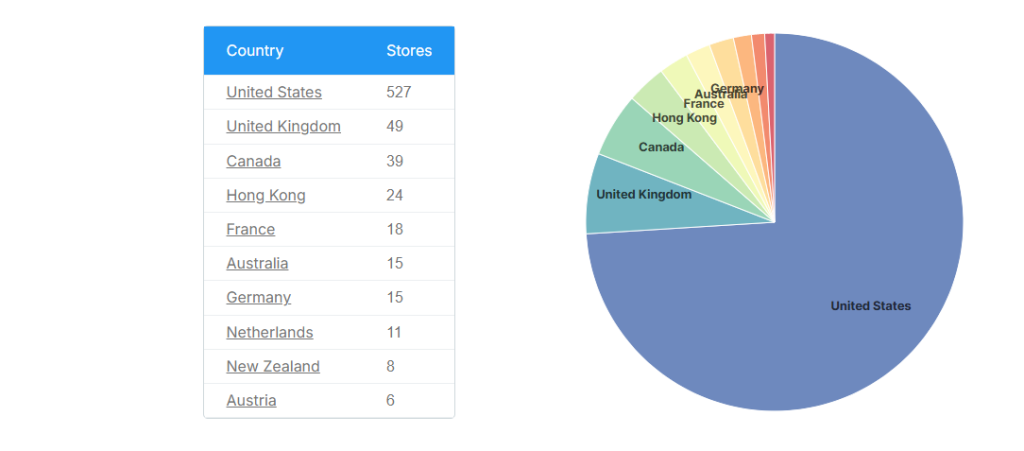
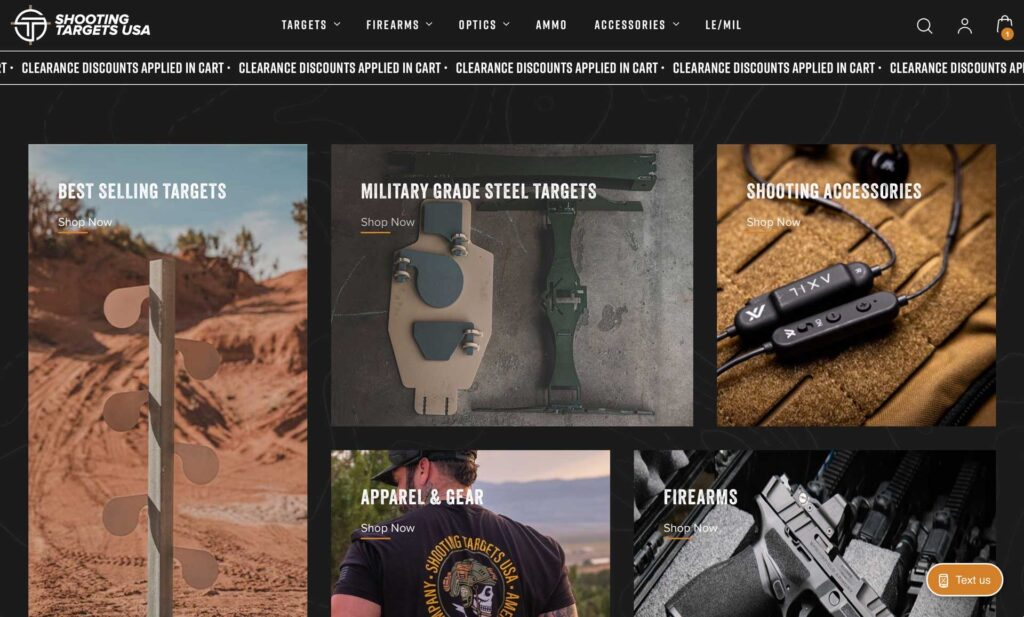
Just as importantly, this market extends beyond the direct sale of regulated weapons. A large share of stores in this space builds around surrounding demand, where compliance concerns shape the catalog as much as customer demand does.
Does Shopify Allow Firearm Sales?
Yes, Shopify may allow certain firearm-related products, but it does not treat the entire firearms category the same way.
Shopify places this market under tighter scrutiny than standard eCommerce. The platform looks closely at product type, compliance risk, and how a store operates. As a result, sellers cannot assume that every item tied to the firearms space can go live without issue.
However, Shopify does not apply one rule to the entire category. Some lower-risk, adjacent products may still fit within platform boundaries, while more heavily regulated items face far stricter limits. That distinction often determines whether a store can operate safely or runs into enforcement problems.
Read More: Age-Restricted Products on Shopify: A Guide to Sales Policies
Shopify Firearms Policy and Compliance Basics
Selling firearms on Shopify is possible in limited cases, but the category faces strict controls. In practice, sellers need to review two layers of rules before listing anything: Shopify’s core platform policy and its payment restrictions.
Core Platform Rules
Shopify’s core policy does not publish a fixed list of prohibited firearm products. Instead, it sets out broad principles: merchants cannot sell anything illegal in their jurisdiction, cannot breach the social contract of commerce, and must comply with any additional rules tied to the specific Shopify products they use. For the Shop sales channel specifically, the policy calls out a broader category of prohibited items, including:
- Weapons, Ammunition, And Explosives
- Related Accessories And Combat Equipment
Payment Processing Restrictions
Even when a product may be allowed on the platform, payment processing creates a second hurdle. Shopify Payments does not support all firearm-related transactions, so many merchants in this space need a separate high-risk or FFL-friendly gateway.
Compliance And FFL Requirements
Policy is only one side of the issue. Whether a firearm seller needs federal licensing depends on what they actually sell. Under the Gun Control Act of 1968, any business engaged in dealing, manufacturing, or importing firearms must hold a Federal Firearms License. Merchants selling pure accessories such as holsters, optics, and cleaning kits fall outside that requirement entirely.
For those who do need an FFL, the license type matters. Type 01 covers retail dealers, Type 07 applies to manufacturers, and Type 03 is limited to collectors of curios and relics. Each carries its own obligations around recordkeeping, background checks, and transfer procedures, which directly affect what a store can list and how it processes orders.
What You Can Sell on Shopify
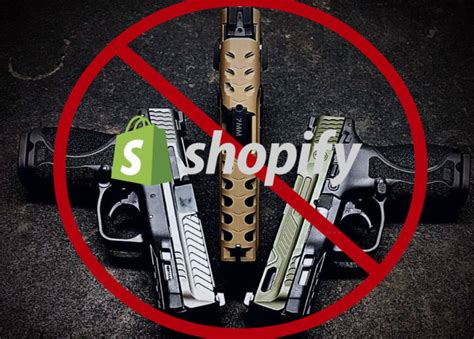
Shopify does not apply the same rule to every firearm-related product. In general, lower-risk items have a better chance of fitting within platform boundaries, while regulated goods and higher-risk accessories face far tighter limits.
| Category | What You Can Sell |
|---|---|
| Support and Safety Gear | Gun Safes, Lockboxes, Trigger Locks, Wall Mounts, Ear Protection, Shooting Glasses, Tactical Gloves, Cleaning Kits, Solvents, Lubricants |
| Optics and Electronics | Scopes, Red Dot Sights, Holographic Sights, Rangefinders, Binoculars, Tactical Flashlights, Laser Trainers, Dry-Fire Targets |
| Apparel and Carry Gear | Holsters, Concealed Carry Bags, Tactical Slings, Camouflage Clothing, Range Bags, Tactical Vests Without Plates, Boots |
| Non-Regulated Parts | Traditional Wooden Stocks, Recoil Pads, Pins, Springs, Archery Equipment, Crossbows, Airsoft Gear |
What You Cannot Sell on Shopify
On Shopify, certain firearm-related items are strictly prohibited by the Acceptable Use Policy (AUP). If you list these, Shopify may take down your store or freeze your funds without warning.
| Category | What You Cannot Sell |
|---|---|
| Restricted Firearms | Automatic Firearms, Semi-Automatic Firearms With Detachable Magazines And Military-Style Features, Ghost Guns, 3D-Printed Weapons |
| Banned Accessories and Modifications | High-Capacity Magazines, Bump Stocks, Binary Triggers, Gatling Triggers, Silencers, Flash Hiders, Restricted Muzzle Devices, Grenade Launchers, Rocket Launchers |
| Ammunition and Explosives | Armor-Piercing Ammunition, Incendiary Ammunition, Tracer Ammunition, Gunpowder Beyond Small Consumer Amounts, Tannerite, Components For IEDs |
| Tactical Compliance Red Flags | AR-15 Or AK-47 Style Parts, Specialized Grips, Handguards, Conversion Kits, Products Linked To Restricted Weapon Modifications |
How to Build a Compliant Firearm eCommerce Store
A compliant firearm store needs more than a working website. Sellers also need the right legal, payment, and transfer setup from the start.
Establish a Legal Business Foundation
Every firearm store needs a proper legal foundation before it can operate. This means securing the required FFL for your business type, registering a business entity, and obtaining any state or local permits tied to regulated sales. Getting this in place before launch reduces risk and gives your store a workable foundation from day one.
Work with an FFL-Friendly Payment Processor
Most standard payment gateways, including Shopify Payments, Stripe, and PayPal, do not support firearm-related transactions. You need a processor built for regulated or high-risk businesses.
Online payment fraud alone caused $44 billion in losses in 2024, and firearm stores operating with incompatible processors face an even higher exposure risk. A compatible payment partner reduces checkout disruption and keeps your store running when legal compliance requirements tighten.
Implement a Strict FFL Transfer System
Federal law requires that firearms ship to a licensed dealer for transfer, not directly to the buyer. Your store needs a clear process for dealer selection at checkout, FFL verification, and recordkeeping for each transfer. Without this in place, you cannot legally complete a firearm sale online.
Implement Age Verification
Firearm purchases are age-restricted under federal and state law. Your store needs a gate that verifies buyer age before they can access restricted products or complete checkout.
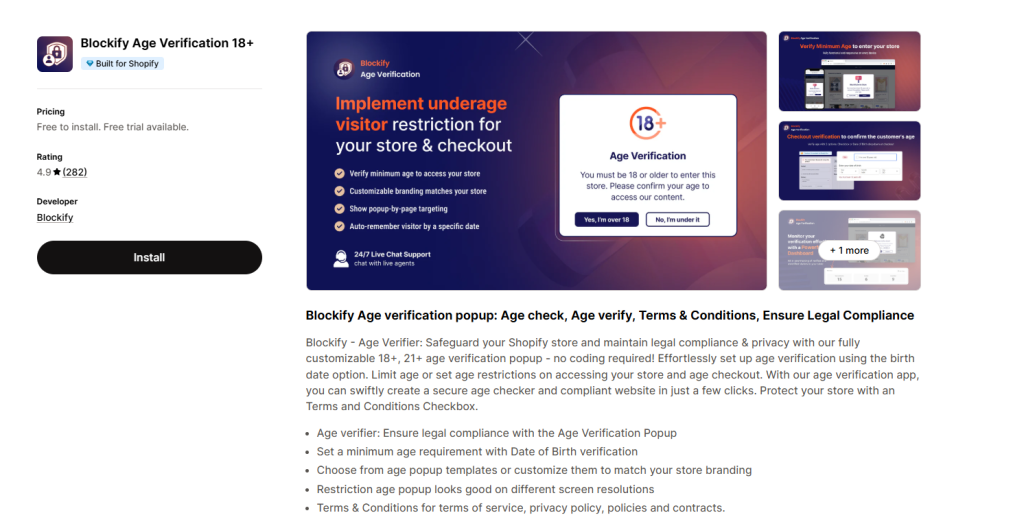
Blockify Age Verification is one of the most reliable options for Shopify merchants in this space, rated 4.9/5 on the Shopify App Store. Key features include:
- Age gate by product, collection, or entire store
- Customizable verification popups that match your store design
- Country and region-based access rules for geo-restricted products
- Compliance logs that record verification activity for audit purposes
- One-click setup with no coding required
Restrict Sales by State and Geography
Certain products, including high-capacity magazines and suppressors, are banned in specific states. Your store needs controls that automatically block restricted items from appearing to buyers in those locations. This protects you from inadvertent sales that violate state law.
Keep Records and Audit Trails
FFL holders are required to maintain acquisition and disposition records for every firearm transaction. Your store setup should support clean recordkeeping from the start, including order details, FFL transfer confirmations, and buyer verification logs. This makes compliance audits and ATF inspections significantly easier to manage.
Top Firearm eCommerce Store Examples
The following examples combine real store models with traffic and revenue data from platforms like Similarweb and Grips Intelligence, which are widely used for website analytics and ecommerce benchmarking.
StopBox USA
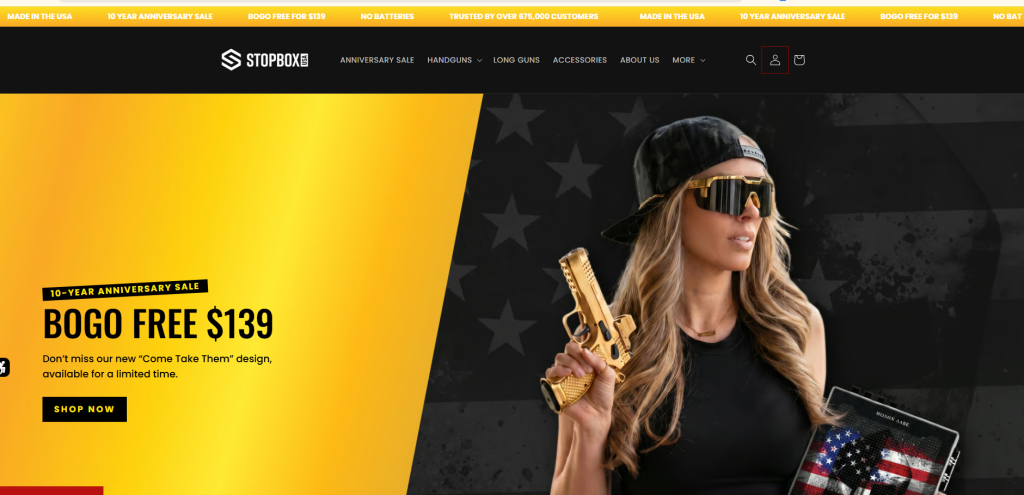
StopBox USA built its store around a single product category: mechanical handgun retention devices. The brand has scaled to over 300,000 customers by staying narrowly focused and keeping the product free of electronics or batteries. Its Shopify store ranks #1 in the Firearms and Weapons category by worldwide store rank, with the store launched in 2017.
- 4.8/5 rating based on 11,000+ verified reviews
- Trusted by 300,000+ parents across the U.S.
- Shopify store rank: #1,363 globally
We The People Holsters
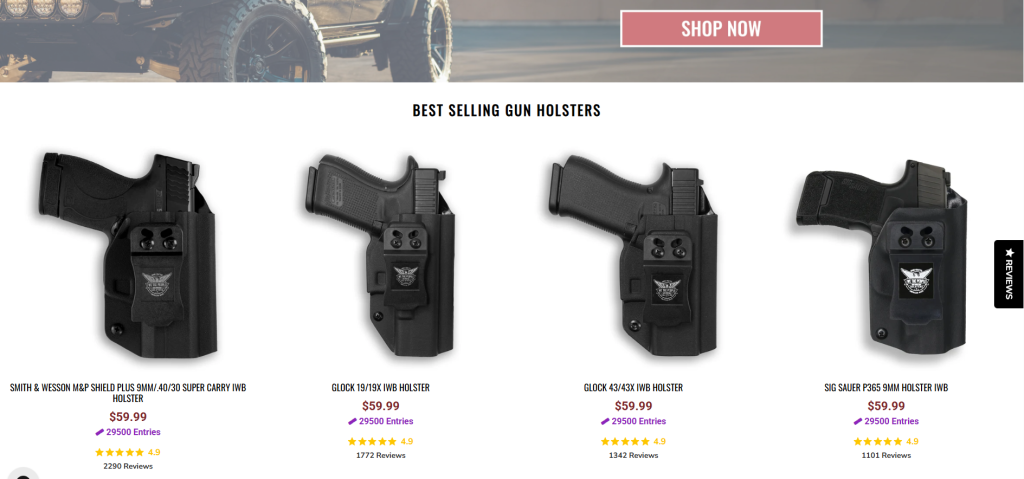
A pure accessory play with no regulated firearms in the catalog. We The People Holsters sells kydex concealed carry holsters engineered for specific pistol models, keeping the store outside FFL territory entirely. Ranked #2 in the category, the store has been live since 2016 and operates primarily on direct and organic search traffic.
- Accessory-only model, no FFL required
- Average product price around $62
- 86.5% of traffic comes from mobile devices
- Shopify store rank: #2,699 globally
Blade-Tech Holsters
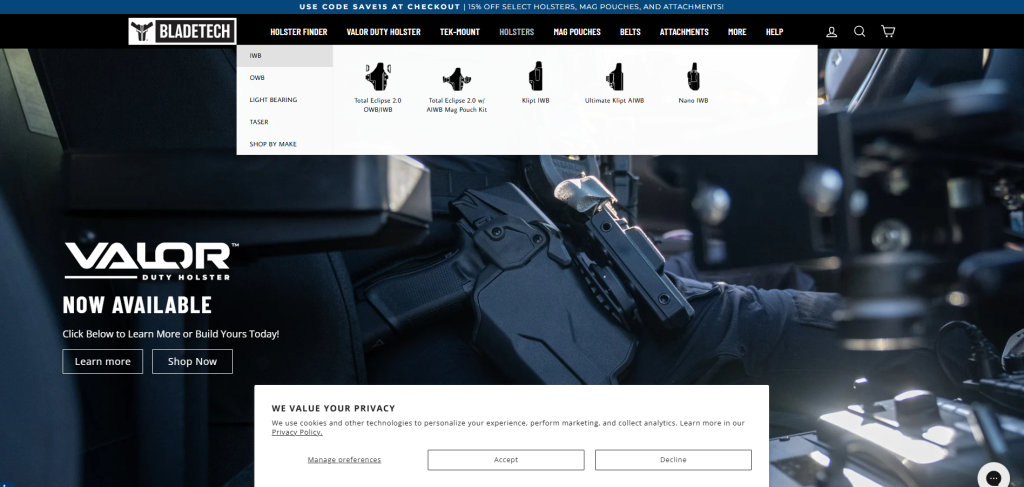
Blade-Tech takes a broader catalog approach, covering holsters, mag pouches, gun belts, and EDC accessories. Made in the USA with a lifetime warranty, the brand targets both civilian and law enforcement buyers. Ranked #3 in the category with the store live since 2017.
- Average product price around $51
- Lifetime warranty across the product line
- Serves both civilian and duty/law enforcement segments
- Shopify store rank: #4,039 globally
Hanks Belts
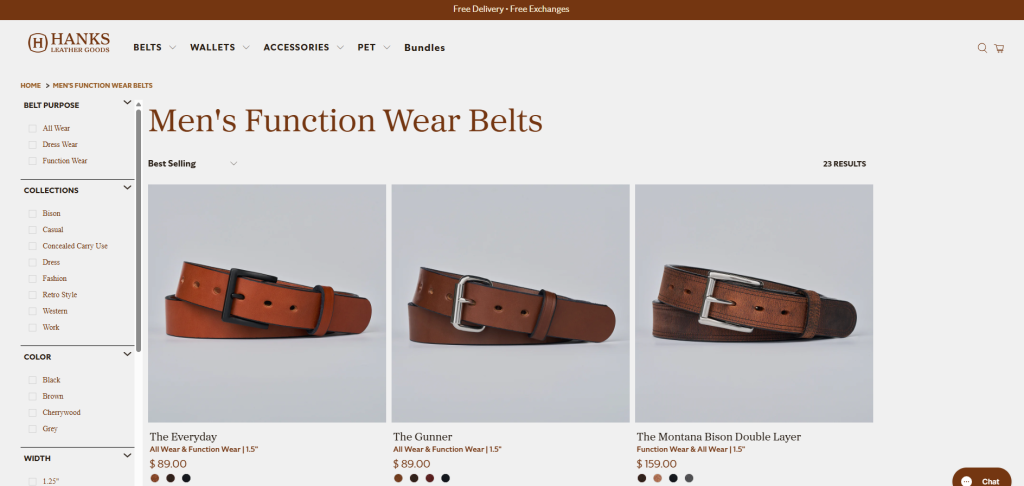
Hanks Belts demonstrates how a leather goods brand with firearm-adjacent products: gun belts, EDC carry belts, can scale on Shopify without touching regulated inventory. The brand operates out of Endicott, New York, with a 100-year warranty on every product.
- Annual revenue estimated at $11.7M in 2025, up 20-50% year-over-year
- Average order value in the $100-125 range
- 59% of sales completed on mobile devices
- Shopify store rank: #10,166 globally
SimpleShot
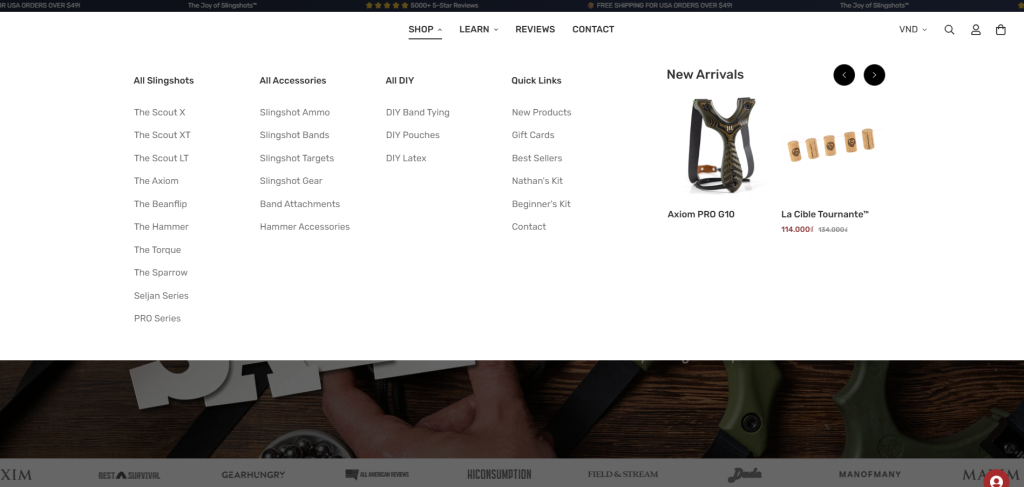
SimpleShot is the clearest example of a niche content-led model in this category. As a DTC slingshot brand, it faces ad platform restrictions that make paid acquisition nearly impossible, so the entire growth engine runs on organic content, community, and on-site conversion. The store has been live since 2016 and serves 100,000+ customers.
- 25% increase in gross sales after implementing on-site personalization
- 17% AOV boost from cross-sell strategy
- Product recommendation quiz converting at 11.6%
- Shopify store rank: #21,246 globally
FAQs about Firearm eCommerce
What happens if Shopify flags a product after it is already live?
Shopify typically removes the flagged listing first rather than suspending the entire store. Repeated violations can escalate to account-level action including fund holds, so keeping a clean catalog from launch matters.
Can I use Shopify POS to sell firearms in a physical store if online sales are restricted?
This is a gray area since Shopify’s AUP applies across the entire platform, not just online storefronts. Verify directly with Shopify before building any in-store workflow around it.
Do accessory-only stores still need to disclose being firearm-adjacent when applying for a payment processor?
Yes. Describing an accessory-only store as general retail is considered misrepresentation and can result in account termination. Always disclose your niche upfront during processor onboarding.
Putting It All Together
Firearm eCommerce on Shopify is less about selling weapons and more about understanding boundaries. The platform clearly separates restricted products from acceptable categories, and that line matters.
Instead of pushing against policy, successful stores adapt. They focus on accessories, build strong branding, and stay compliant from day one. That approach keeps your business stable and scalable over time.
