
Blockify vs Signifyd: Which Shopify Fraud Protection App Should You Choose?

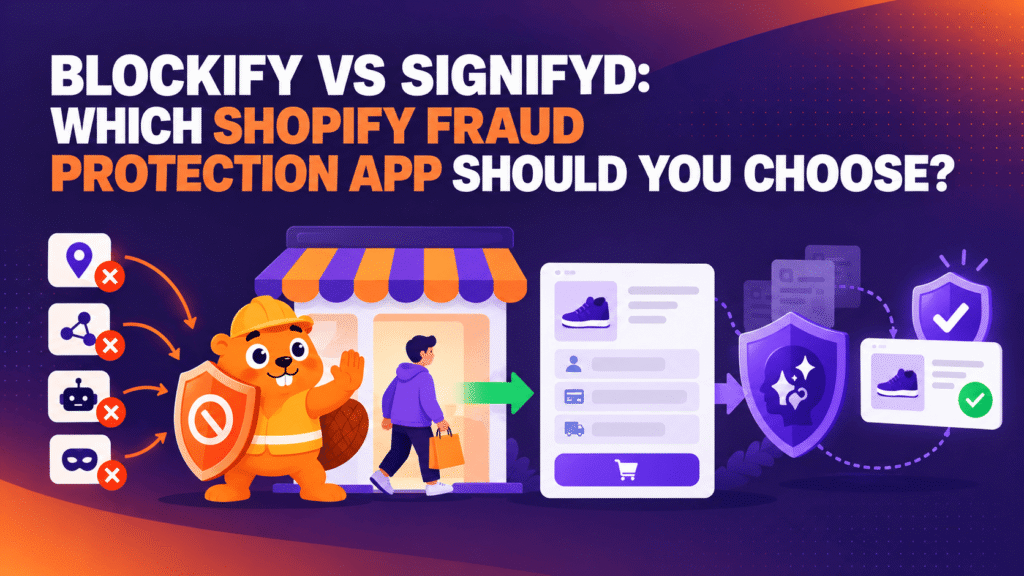
When merchants search for Blockify vs Signifyd, they are usually not asking, “Which app has more features?” They are asking a more practical question: “Which app will protect my Shopify store in the way I actually need?” Both apps sit in the fraud category, but they solve different parts of the fraud problem. Blockify Fraud Filter focuses on controlling risky traffic before it becomes a problem: IP blocking, country blocking, VPN/proxy/Tor detection, bot filtering, visitor analytics, fraud filters, redirects, whitelists, and selected order-response automation. Signifyd focuses more on order decisioning and financial protection: real-time approval or decline decisions, fraud chargeback guarantees, return-abuse protection, and chargeback analytics.
This guide compares both apps in plain English so Shopify merchants can decide based on risk type, budget, workflow, and growth stage.
What Is Blockify Fraud Filter?
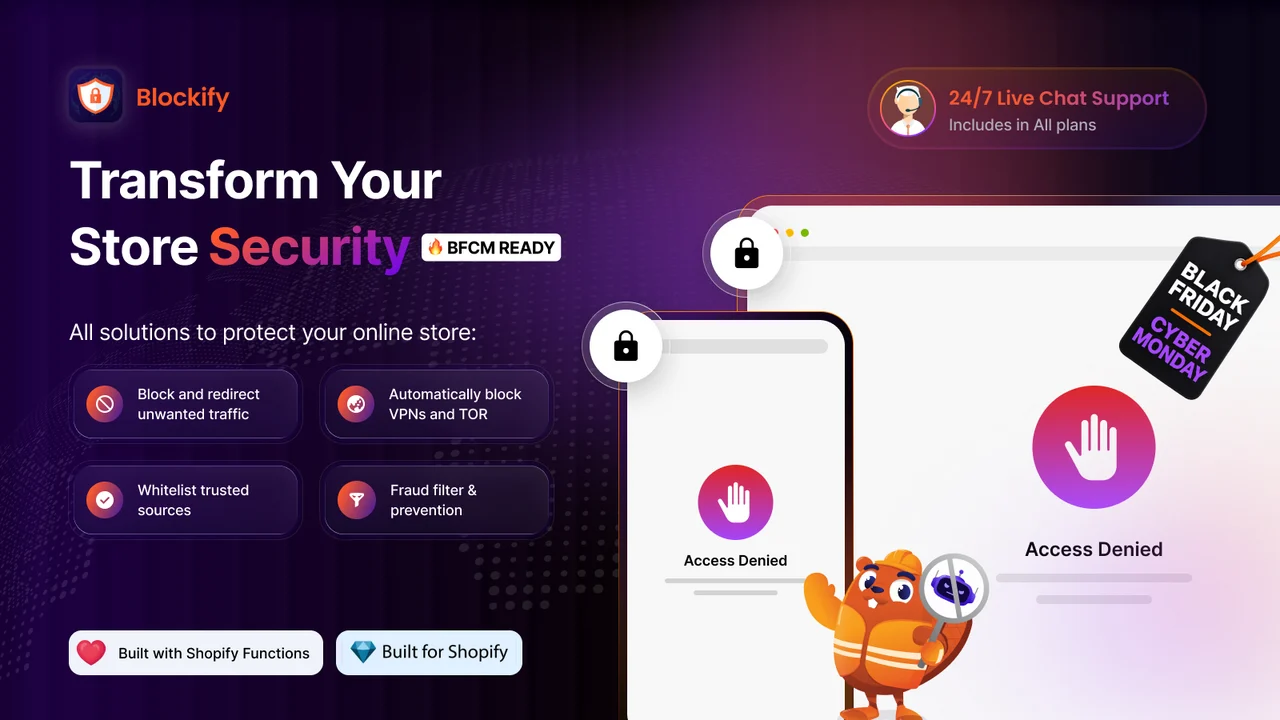
Blockify Fraud Filter is a Shopify fraud-prevention app designed to help merchants control store access, analyze suspicious traffic, and respond to risky behavior. Its Shopify listing describes the app as a fraud filter and fraud prevention tool for redirecting and blocking IPs, countries, bots, proxy users, and VPN users. The listing also highlights visitor analytics, fraud-order detection, content protection, and risk reports.
Blockify’s own product page frames the app around stopping risky traffic before it hits checkout. It says merchants can block or redirect visitors by IP, country, ISP, referrer, URL, keywords, VPN/Tor, or data-center traffic. It also describes fraud filters for patterns such as IP country not matching billing country, velocity spikes, suspicious referrers, and repeated low-value orders.
In simple terms, Blockify helps merchants answer questions like:
- Should this visitor be allowed into my store?
- Should this IP range, country, VPN, proxy, Tor, ISP, or referrer be blocked?
- Is this traffic real shopper activity or bot noise?
- Which suspicious visitors or orders keep repeating?
- Which visitors should be whitelisted so they are not blocked by mistake?
- Can I redirect unsupported traffic instead of blocking it completely?
Blockify does not make fraud disappear. No fraud app can do that. Its value is that it gives merchants a practical rule-based layer before and around checkout, especially when the problem is visible in traffic patterns.
What Is Signifyd?
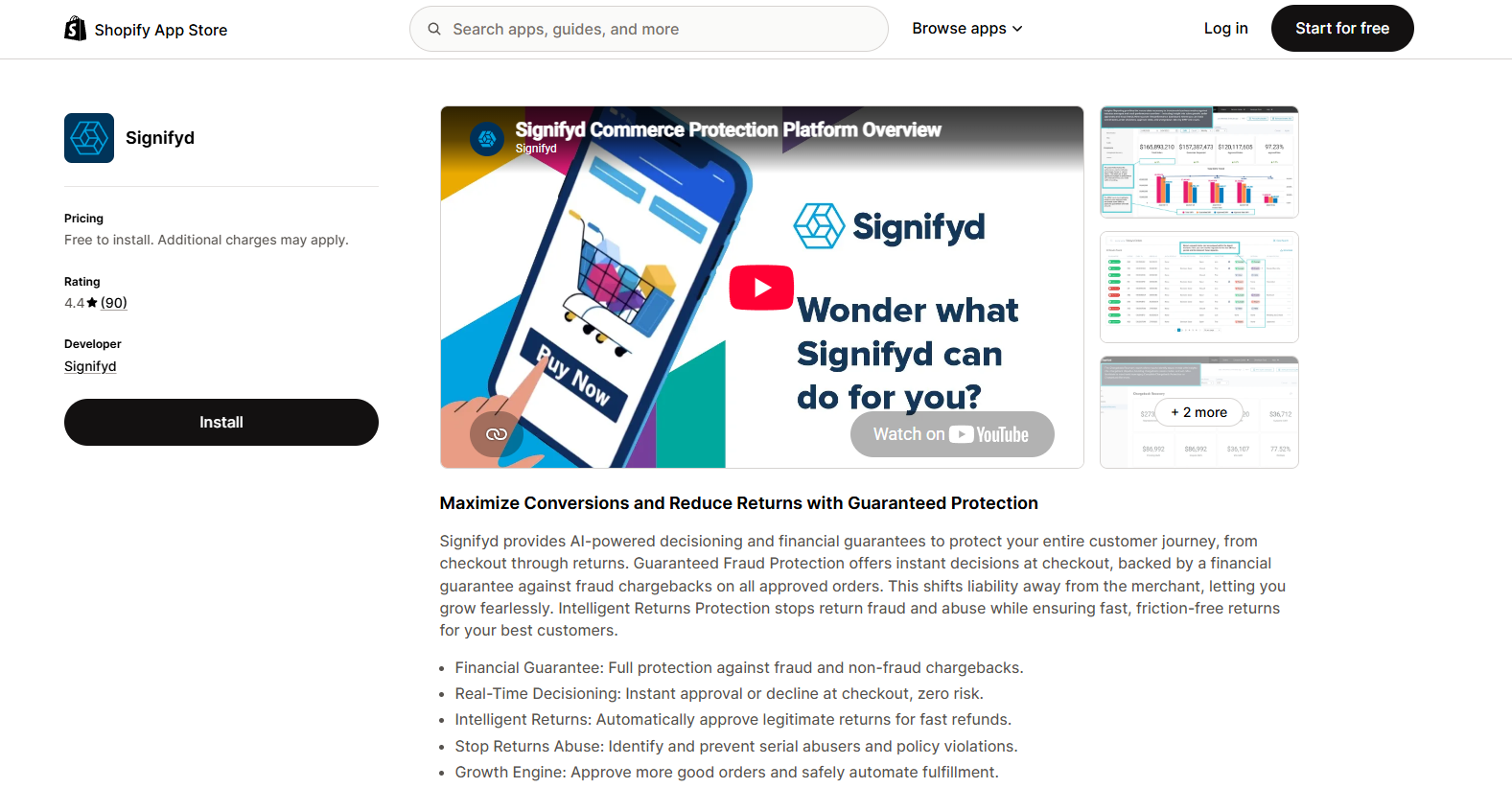
Signifyd is a commerce protection platform for fraud decisioning, chargeback protection, and returns protection. On the Shopify App Store, Signifyd says it provides AI-powered decisioning and financial guarantees across the customer journey from checkout through returns. Its Guaranteed Fraud Protection offers instant decisions at checkout backed by a financial guarantee against fraud chargebacks on approved orders.
Signifyd’s Shopify listing highlights:
- Financial guarantee against fraud and non-fraud chargebacks
- Real-time approval or decline decisions at checkout
- Returns protection and return-abuse prevention
- Chargeback analytics and risk reports
- Custom rules, blocklists, AI-powered detection, and automated workflows
On its Shopify chargeback protection page, Signifyd says it checks order details against its merchant network to validate good shoppers and stop fraudsters. The same page says decisions are delivered in milliseconds and describes a “100% liability shift” for fraudulent chargeback losses.
In plain English, Signifyd is built for merchants who want to approve more good orders, reduce false declines, automate fraud decisions, and shift fraud chargeback liability when orders are approved under the program’s terms.
Blockify vs Signifyd: Feature Comparison Table
| Comparison point | Blockify Fraud Filter | Signifyd |
|---|---|---|
| Main role | Traffic control, visitor rules, fraud filters, bot blocking, and fraud-order analytics | Order decisioning, fraud chargeback guarantee, returns protection, and chargeback analytics |
| Best for | Merchants who want to block risky traffic before it causes damage | Merchants who want instant order decisions and financial protection against qualifying chargebacks |
| Fraud layer | Before checkout, around checkout, and selected order response | Checkout decisioning, approved-order protection, returns, and chargeback recovery |
| IP blocking | Yes, includes IP address, IP range, location, and related controls | Not the main focus |
| Country/state blocking | Yes | Not the main focus |
| VPN/proxy/Tor controls | Yes, used as connection-risk signals | May use risk signals, but not positioned as a merchant-managed VPN/proxy blocker |
| Bot blocking | Yes, including bad-bot control and allowed-bot handling | Listed under fraud types, but the product is not mainly a traffic blocker |
| Visitor analytics | Yes, useful for reviewing IP, geo, device/browser, risk score, and access patterns | Stronger focus on order/risk reporting and chargeback analytics |
| Real-time approve/decline decisions | Fraud filters and automation may support selected responses, but it is not primarily a liability-backed decisioning platform | Yes, this is a core Signifyd promise |
| Chargeback guarantee | Not the core offer; do not treat Blockify as a chargeback insurance product | Yes, Signifyd’s listing says approved orders are backed by a financial guarantee against fraud chargebacks |
| Returns abuse protection | Not the main product focus | Yes, Signifyd highlights Intelligent Returns and return-abuse protection |
| Content protection | Yes, such as disabling right-click, inspect, shortcuts, and copy actions | Not the main focus |
| Pricing visibility | Shopify listing shows free-to-install entry with paid plans and limits | Shopify listing shows free to install, with external/additional charges and a 14-day free trial note |
| Best merchant type | Small to growing Shopify stores that need practical control over traffic and suspicious behavior | Higher-volume merchants that need automated decisioning and guaranteed fraud/chargeback protection |
Where Does Blockify Win?
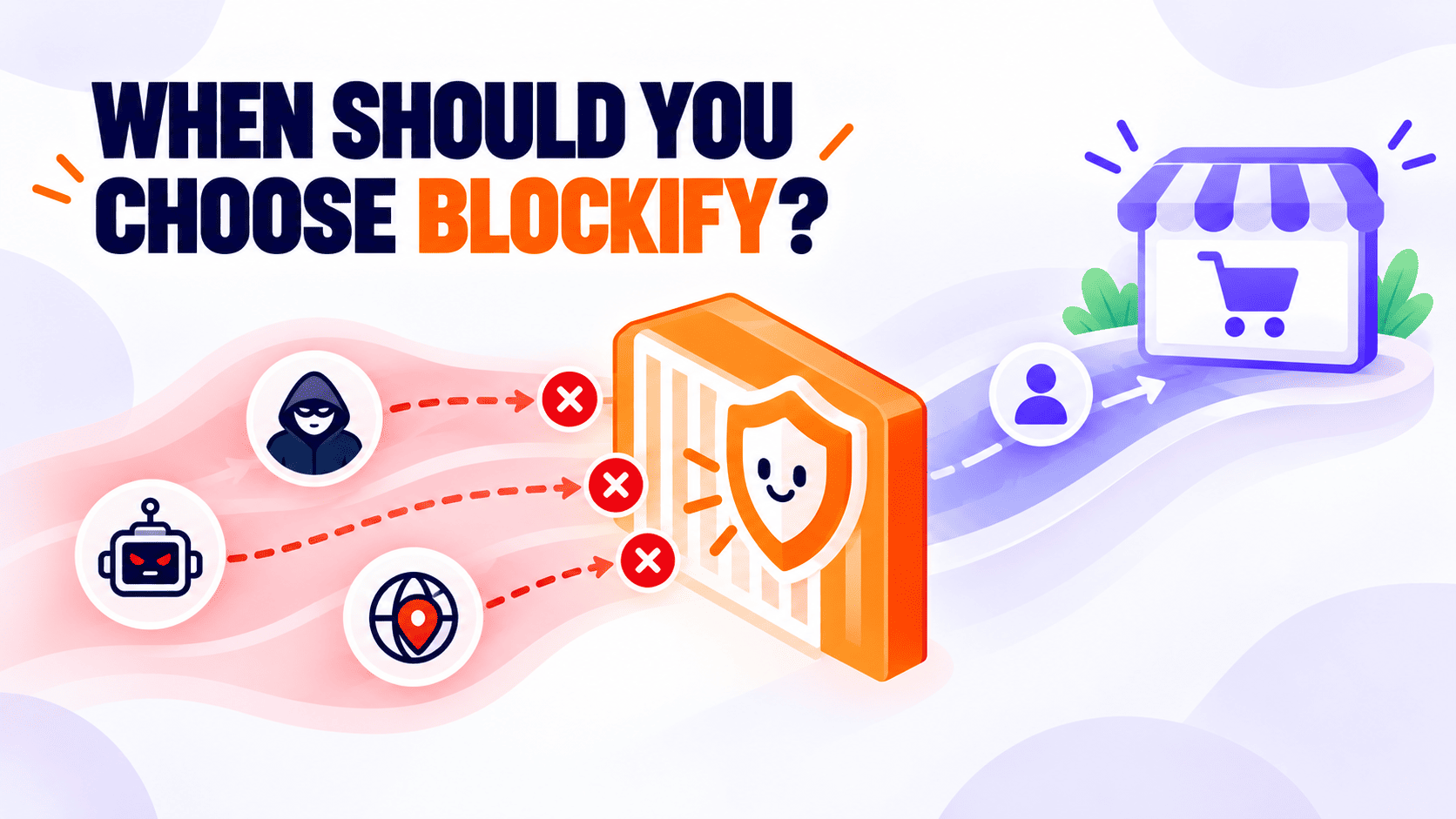
Blockify is strongest when the merchant wants more control before an order exists. Many Shopify fraud problems do not begin as a chargeback. They begin as traffic that should not be there: bot floods, repeated visits from suspicious IP ranges, VPN-heavy sessions, unsupported countries, fake signups, spam behavior, copycat scraping, and card-testing attempts.
Blockify is useful in this early layer because it lets merchants create rules based on traffic and access signals.
1. Blockify Helps Stop Risky Traffic Before Checkout
Blockify’s product page says merchants can block or redirect visitors by IP, country, ISP, referrer, URL, keywords, VPN/Tor, or data-center traffic. This is a major difference from platforms that focus mainly on order approval.
For example, a merchant may notice:
- Repeated checkout attempts from one IP range
- Traffic spikes from countries the store does not ship to
- Bot sessions that distort campaign data
- Referrers connected to spam or suspicious traffic
- VPN/proxy patterns during promotion periods
- Low-value test orders before larger fraud attempts
With Blockify, the merchant can turn those patterns into access rules. They can block, redirect, or whitelist traffic instead of waiting for every suspicious session to reach checkout.
This matters for smaller teams. A merchant may not have a full fraud operations team, but they can still apply practical filters around obvious risk patterns before every issue becomes a manual review.
2. Blockify Gives Merchants More Rule-Level Control
Some merchants do not want a black-box decision. They want to see the pattern, understand the rule, and decide how strict the store should be. Blockify fits that workflow with visitor analytics and fraud-order analytics that help merchants investigate what is happening. According to the internal product knowledge base, visitor analytics can include IP address, geolocation, access details, visit counts, risk score, device/browser data, browsing data, and allowed or blocked visitor logs.
That kind of visibility helps merchants tune rules carefully. Blocking an entire country may be too broad. Blocking a smaller IP range, ISP, referrer, or connection type may be more reasonable. Whitelisting trusted users can also reduce false positives.
This is where Blockify feels more hands-on than Signifyd. Signifyd is built to decide whether an order should be approved or declined. Blockify is built to help merchants shape who gets into the store and what traffic patterns deserve action.
3. Blockify Is Better for Bot and Content Protection
Not all fraud is payment fraud. Some of it is automation abuse. Blockify is relevant when merchants deal with:
- Bad bots
- Fake traffic
- Scrapers
- Spy tools
- Competitor copying
- Fake accounts
- Card-testing behavior
- Distorted analytics from non-human sessions
Blockify’s product page describes tools to block bad bots while allowing trusted crawlers such as Google and Facebook. That distinction matters because blocking every bot can create new problems. Merchants still need search engines, social previews, and legitimate integrations to work.
Blockify also includes content protection features, such as disabling right-click, inspect, shortcuts, and copy actions. These are not perfect intellectual-property protection, but they can add friction against casual copying, scraping, and spy behavior.
4. Blockify Is Easier to Position for Cost-Sensitive Stores
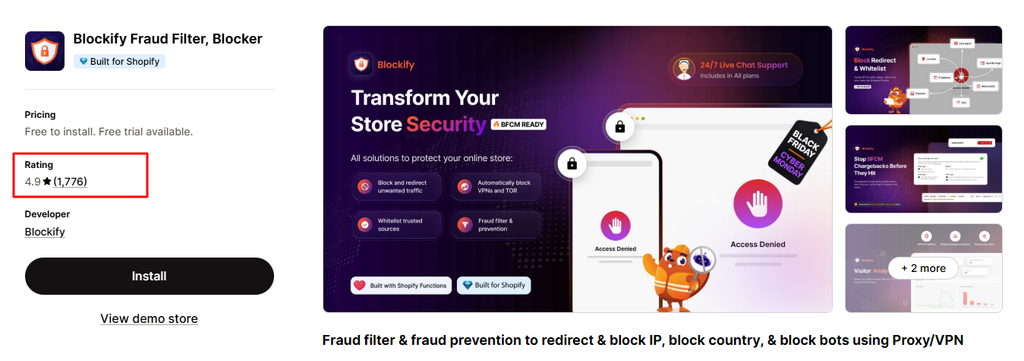
Pricing changes, so merchants should always check the live Shopify App Store before buying. At research time, Blockify’s listing showed a free-to-install entry plan and a high Shopify rating with more than 1,700 reviews. The free tier has limits, but it gives merchants a lower-friction way to start with traffic rules and analytics.
Signifyd’s Shopify listing also says free to install, but it notes that additional or external charges may apply and that charges may apply after a 14-day free trial. That is not unusual for a guaranteed fraud protection provider, but it does mean merchants should evaluate cost against order volume, chargeback exposure, and plan terms.
For small and mid-size Shopify stores that mainly need blocking, redirecting, visitor review, and bot control, Blockify may be the more approachable first step.
Where Does Signifyd Win?
Signifyd is strongest when the merchant’s main pain is order decisioning and chargeback liability. If a store is losing money after orders are approved, dealing with disputes, or rejecting too many good customers out of fear, a traffic blocker alone may not solve the whole problem.
1. Signifyd Offers Financial Protection for Approved Orders
The biggest advantage is its guarantee model. Its Shopify App Store listing says Guaranteed Fraud Protection provides instant decisions backed by a financial guarantee against fraud chargebacks on all approved orders. Signifyd’s own Shopify page also describes a full financial guarantee and liability shift. That is different from Blockify.
Blockify may help reduce exposure to selected fraud patterns, but it is not positioned as a chargeback guarantee provider. It gives merchants tools to block and investigate risk. Signifyd is selling confidence that approved orders can move forward with fraud chargeback protection under the program terms.
For merchants with high average order value, high fraud pressure, or expensive fulfillment costs, that guarantee can be more important than traffic controls.
2. Signifyd Is Stronger for Automated Order Approval
Signifyd is also built for speed. Its Shopify chargeback protection page says order decisions are delivered in milliseconds. The app listing describes real-time approval or decline at checkout. This matters when manual review slows fulfillment. If a store holds too many orders for review, good customers wait longer. If it approves too aggressively, fraud losses rise.
Signifyd tries to solve that tension by making fast decisions and backing approved orders with protection. That can help merchants automate fulfillment while reducing fear around fraud chargebacks.
3. Signifyd Covers More Than Traditional Payment Fraud
Signifyd’s listing highlights Intelligent Returns, return-abuse prevention, chargeback analytics, and risk reports. Its chargeback guarantee guide says merchants should understand what a provider covers and notes that Signifyd’s guarantee can include product cost and associated costs such as chargeback amount, shipping fees, and processor fees.
That broader coverage makes Signifyd more relevant for stores where fraud is not limited to suspicious visitors. It may also involve:
- Friendly fraud
- Chargeback disputes
- Return abuse
- Serial abusers
- Policy violations
- Fulfillment decisions
- Approval-rate optimization
If those are the store’s biggest pain points, Signifyd may be the better fit.
Which App Is Better for Shopify Fraud Prevention?
For most Shopify merchants comparing Blockify vs Signifyd, Blockify is the better fit for fraud prevention.
The reason is simple: Blockify helps merchants stop risky activity earlier. It can block or redirect suspicious visitors by IP, country, state, city, VPN, proxy, Tor, ISP, referrer, and bot signals before those visitors create fake checkouts, card-testing attempts, or risky orders. It also gives merchants visitor analytics, fraud-order analytics, whitelists, redirects, and rule-based controls, so the team can review the pattern and act before the issue reaches fulfillment or chargebacks.
Signifyd is still a strong fraud solution, but its strength is different. It focuses more on real-time order decisioning, fraud chargeback guarantees, false-decline reduction, and return-abuse protection. That makes Signifyd valuable for stores with serious chargeback exposure or high order volume. But if the goal is to prevent more risky traffic from entering the store in the first place, Blockify gives merchants broader and more direct control.
In short, Blockify is stronger when the store needs to block suspicious traffic, bots, VPN/proxy users, bad IPs, unsupported countries, and repeated risky behavior before checkout. Signifyd is stronger when the store mainly needs to reduce chargeback liability and automate approve-or-decline decisions after an order is placed.
Which App Fits Your Store Size?
For many small and mid-size Shopify stores, Blockify is the easier first step. These merchants usually need practical controls they can understand quickly: block countries they do not sell to, restrict suspicious IPs, redirect unsupported regions, review visitor logs, reduce bot noise, and protect product content from casual copying.
For growing or enterprise stores, Signifyd becomes more compelling when order volume, chargebacks, and fulfillment speed are the bigger pressure points. These merchants often care more about faster approval, fewer false declines, less manual review, chargeback operations, return-abuse control, and liability shift on approved orders.
Some merchants may use both layers: Blockify for traffic and bot control, then Signifyd for order decisioning and chargeback protection. If you do this, keep Blockify rules narrow and evidence-based. Overblocking good customers before checkout can prevent Signifyd from evaluating orders that may have been legitimate.
Pricing and Ratings: What Should Merchants Check?
For pricing transparency and Shopify App Store trust signals, Blockify has the clearer advantage.
At research time, Blockify showed a stronger Shopify App Store profile: a 4.9 rating with more than 1,700 reviews, plus a free-to-install entry point with plan-based upgrade options. That gives merchants a clearer way to start small, test the app, and upgrade only when they need more rules, analytics, or automation.
Signifyd also appears as free to install, but its listing notes that additional or external charges may apply and that charges may apply after the 14-day free trial. This makes pricing harder to judge from the Shopify listing alone. Merchants usually need to review the plan terms, guarantee coverage, and order-volume fit before they can understand the real cost.
The review signal also favors Blockify. A higher rating with a much larger review count suggests stronger Shopify App Store adoption and broader merchant validation. Signifyd may still be a strong solution for chargeback protection, but based on visible Shopify listing signals, Blockify looks more accessible and easier to evaluate for most merchants.
At research time, the comparison looked like this:
| Item | Blockify | Signifyd |
|---|---|---|
| Shopify listing pricing signal | Free to install, with plan limits and paid upgrade options | Free to install, with additional/external charges and a 14-day free-trial note |
| Shopify rating snapshot | 4.9 rating with more than 1,700 reviews shown on the listing | 4.4 rating with 90 reviews shown on the listing |
| Pricing clarity | Easier to understand from the Shopify listing | Harder to estimate without checking external charges and guarantee terms |
| Best fit from a cost perspective | Merchants who want a lower-friction way to start fraud prevention | Merchants who are ready to evaluate chargeback-guarantee pricing against order volume |
Final take: Blockify is the stronger choice on pricing accessibility, rating strength, and Shopify App Store trust signals. Signifyd may justify its cost for merchants with serious chargeback exposure, but Blockify is easier for most merchants to try, compare, and adopt.
Final Recommendation: Should You Choose Blockify or Signifyd?
Blockify vs Signifyd comes down to where the risk starts. For most Shopify merchants, Blockify Fraud Filter is the stronger first choice because it helps stop suspicious traffic before it becomes fake checkouts, risky orders, or chargeback problems.
- Choose Blockify if you need to block unwanted traffic, bots, VPN/proxy/Tor users, unsupported countries, fake checkouts, repeated low-value attempts, or content scraping.
- Choose Signifyd if your main issue is chargeback liability, order approval confidence, manual review, false declines, return abuse, or post-order protection.
In short, Blockify is better for preventing risk earlier. Signifyd is better for protecting approved orders after checkout.
