
10 Successful Shopify Supplement Stores to Inspire Your Business

Shopify supplement store examples are everywhere, but most lists stop at surface-level observations like “great branding” or “clean design.”
| What you’ll learn in this article: ● Top 10 Shopify Supplement Store Examples Worth Studying ● What Makes a Successful Shopify Supplement Store? ● Protect Your Shopify Supplement Store Revenue with Blockify ● How to Build a Shopify Supplement Store That Converts |
Top 10 Shopify Supplement Store Examples Worth Studying
The stores below are ranked roughly by monthly traffic, pulled from Similarweb and Semrush estimates in no particular order. What matters more than the raw numbers is what each brand does differently to earn and keep that traffic.
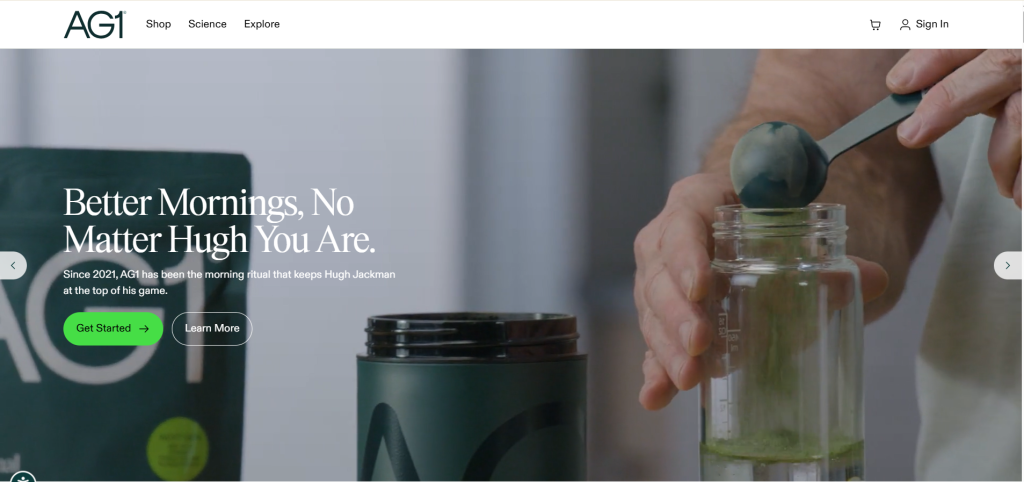
Athletic Greens (AG1)
AG1 started as a single greens powder in 2010 and grew into one of the most recognized supplement brands in the world. The brand runs on Shopify Plus and has built its entire growth engine around one product, one promise, and a subscription model that locks in recurring revenue at scale.
Key Highlights:
- Single-SKU store with subscription-first checkout as the default option
- Expert and athlete endorsements stacked strategically alongside customer reviews
- Subscription portal lets customers skip shipments instead of canceling, reducing churn
- Podcast and influencer partnerships dominate new customer acquisition
Traffic: ~1.7M visits/month
Best for: Brands building around a single hero product with a subscription model
Transparent Labs
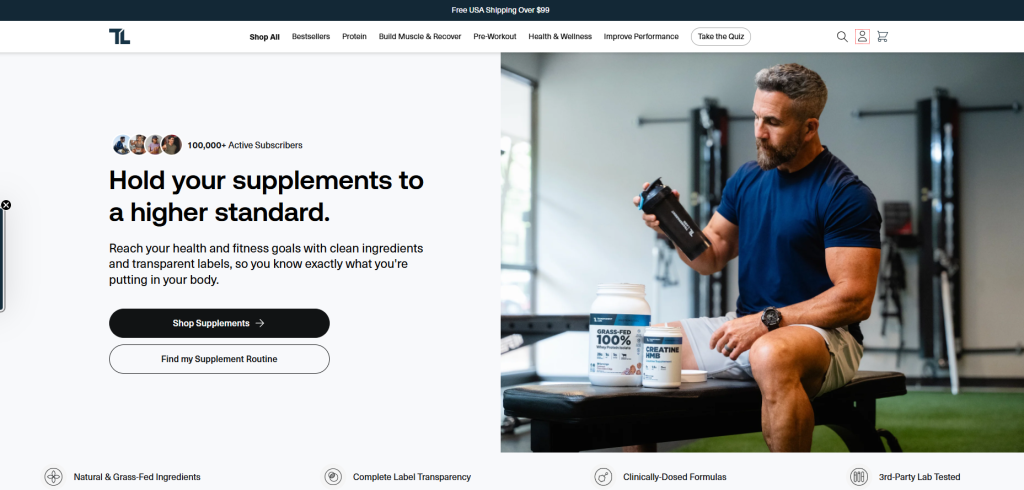
Founded in 2012, Transparent Labs built its reputation on one promise: full label transparency, no proprietary blends, no fillers. In a category where most brands hide formulas, that positioning hits differently. Their product pages read like educational documents, and their Certificates of Analysis are publicly accessible with clickable lot numbers linking to actual lab reports.
Key Highlights:
- Every ingredient listed with exact dosage, zero proprietary blends
- Third-party test results accessible directly from each product page
- Clean, performance-focused design that lets ingredient quality do the selling
- Audience skews 61% male, 25–34, copy and design reflect this consistently
Traffic: ~737K–813K visits/month
Best for: Performance brands competing on ingredient quality and label transparency
Beam
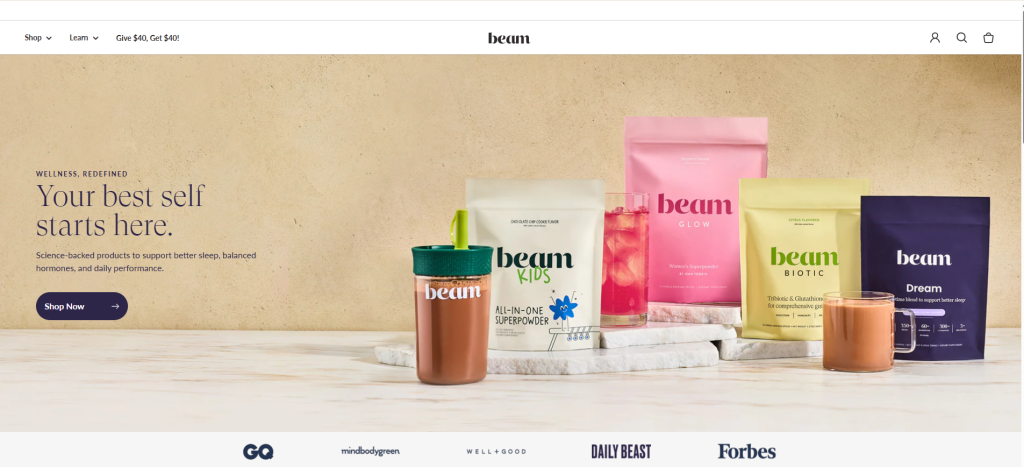
Founded in 2018, Beam carved out a clear niche in a crowded market: sleep and recovery supplements for people who actually care about what’s in their products. Their flagship Dream Powder became the product that put them on the map, and the entire store is built around converting first-time buyers into long-term subscribers.
Key Highlights:
- Sleep-focused positioning in a category most brands treat as an afterthought
- All formulations vegan, non-GMO, sugar-free, and third-party tested
- Subscription-first DTC model with no retail distribution, 100% online
- Strong UGC and micro-influencer strategy driving social traffic
Traffic: ~287K–606K visits/month
Best for: Brands building around a single wellness niche with a tight product range
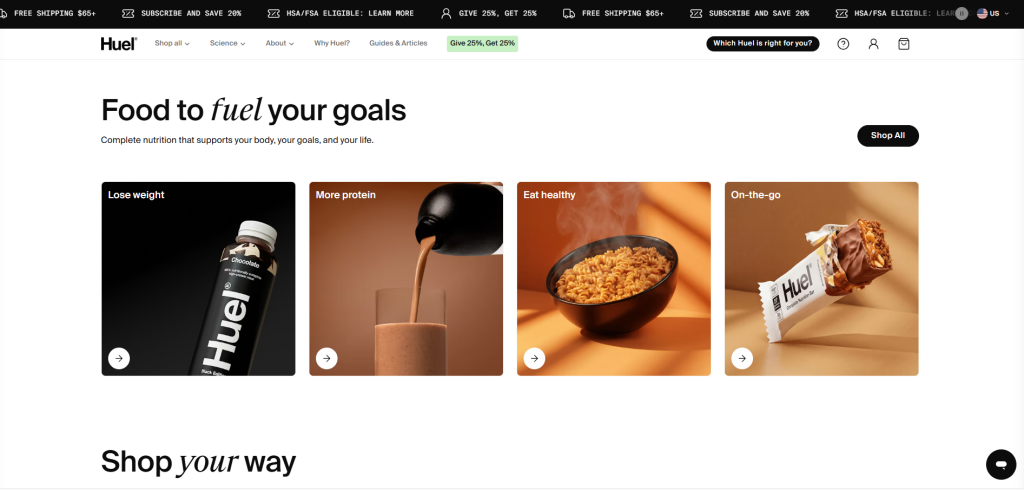
Huel
Huel (Human + Fuel) was founded in 2015 with a simple but ambitious idea: make nutritionally complete meals that are fast, sustainable, and affordable. The brand runs on Shopify Plus across nine global online stores and has built one of the most recognizable DTC supplement businesses in Europe.
Key Highlights:
- Nutritionally complete meal replacement positioning, not just a supplement, but a lifestyle product
- Subscription model with tiered discounts and a flexible self-serve portal
- Strong educational content tying products to sustainability and complete nutrition
- Operates multiple localized Shopify Plus storefronts across global markets
Traffic: ~2M+ visits/month
Best for: Brands targeting health-conscious consumers who want convenience alongside nutrition
Obvi
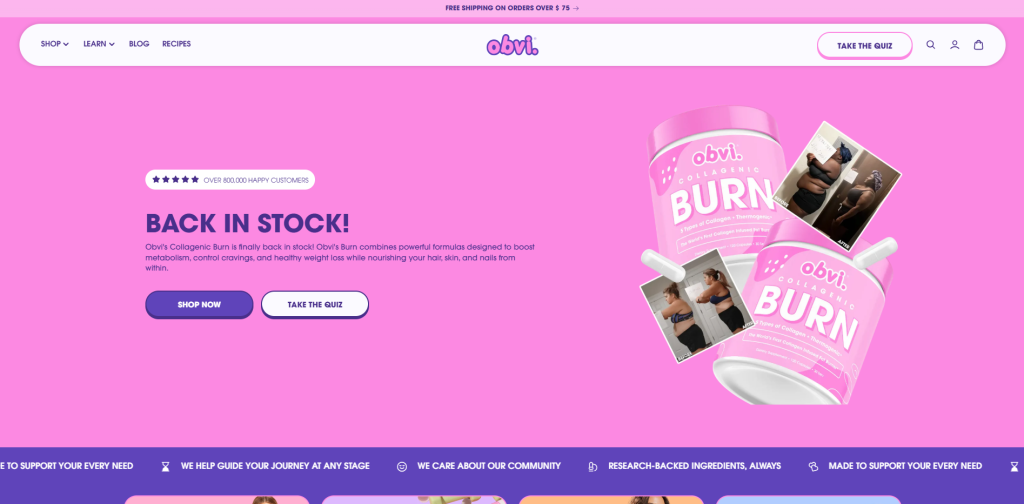
Obvi spotted a gap that most supplement brands completely missed: collagen products were boring, looked clinical, and tasted terrible. The three founders flipped the script with playful packaging, fun flavors, and a brand identity built around community rather than credibility. The result was $40 million in revenue within five years, selling across 75 countries.
Key Highlights:
- Collagen-focused brand with bold, colorful packaging that stands out on a feed and a shelf
- Facebook community of 100K+ customers used as a primary retention and research tool
- Intelligent bundle strategy “Triple Burn Bundle” and progressive product journeys increase AOV significantly
- Product pages rebuilt as high-speed landing pages capable of taking paid traffic directly without losing conversions
Traffic: ~61K organic visits/month
Best for: Brands targeting millennial and Gen Z women with a community-first growth model
Primal Harvest
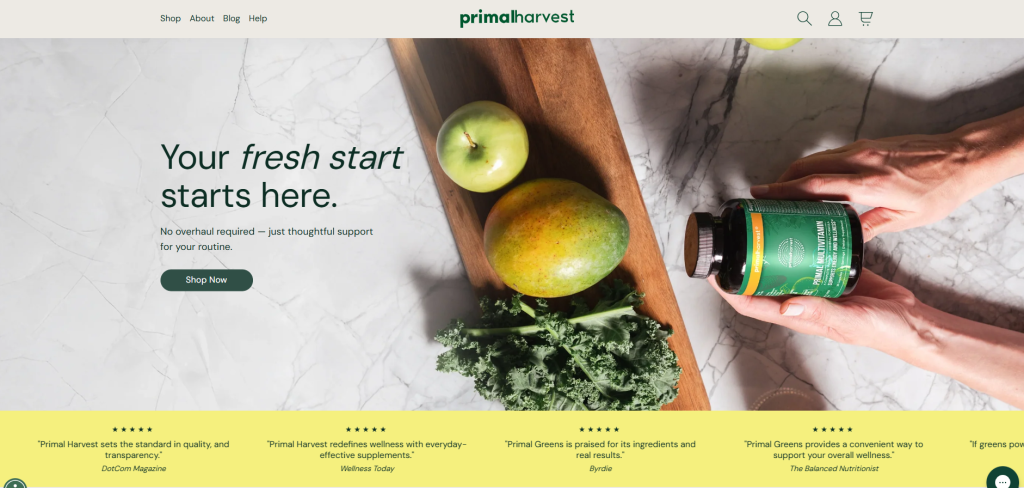
Primal Harvest positions itself as a premium natural supplement brand built for everyday wellness, not just athletes or biohackers. Their catalog spans multivitamins, collagen, probiotics, turmeric, NAD+, and more, all manufactured in FDA-registered, GMP-certified facilities in the US.
Key Highlights:
- Broad wellness-focused catalog with non-GMO, gluten-free, soy-free formulations across all products
- Subscription model with easy reorder reminders driving strong repeat purchase rates
- Clean, trust-focused design with certifications and manufacturing details prominently displayed
- Strong native advertising presence via Taboola driving high volumes of top-of-funnel traffic
Traffic: ~450K–600K visits/month
Best for: Brands targeting a broad 35–65 demographic looking for daily wellness staples
Ritual
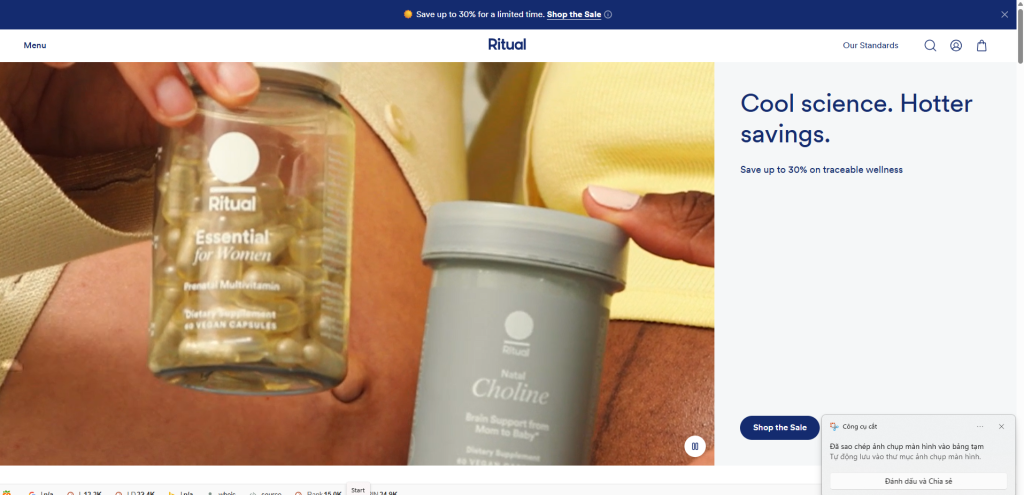
Ritual launched in 2016 with a sharp focus on one customer: women who read ingredient labels and don’t trust what they find. Their minimalist design, open-supply-chain model, and science-backed formulations created a category of their own. Every ingredient in a Ritual product links back to a specific supplier, a specific form, and a specific reason it was chosen.
Key Highlights:
- Fully traceable supply chain, every ingredient links to its source on the product page
- Subscription-first model with a signature delayed-release capsule that became a brand icon
- Minimalist, editorial design aesthetic that differentiates sharply from the typical supplement store
- Content and email strategy built around education, not promotion, drives strong organic and direct traffic
Traffic: ~400K–500K visits/month
Best for: Brands targeting educated, health-conscious women who prioritize ingredient quality and transparency
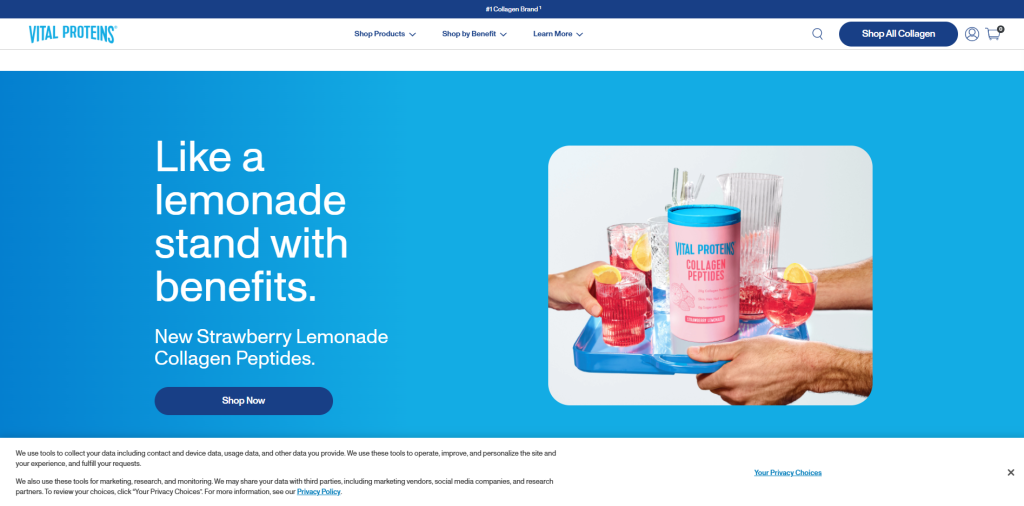
Vital Proteins
This brand built early credibility through micro-influencers and authentic UGC before those terms were even part of the marketing playbook. Vital Proteins is one of the brands that helped bring collagen into the mainstream. Their approach created a normalizing effect that made the category feel accessible, not clinical.
Key Highlights:
- Pioneer in the collagen category with one of the most recognizable supplement brands in the US
- Always-on content strategy across Pinterest, Instagram, and TikTok built around daily wellness routines
- Subscribe-and-save at 20% off drives strong subscription base
- High conversion rate of 3–3.5%, above the supplement industry median
Traffic: ~200K sessions/month
Best for: Brands building a mainstream wellness identity through lifestyle content and influencer partnerships
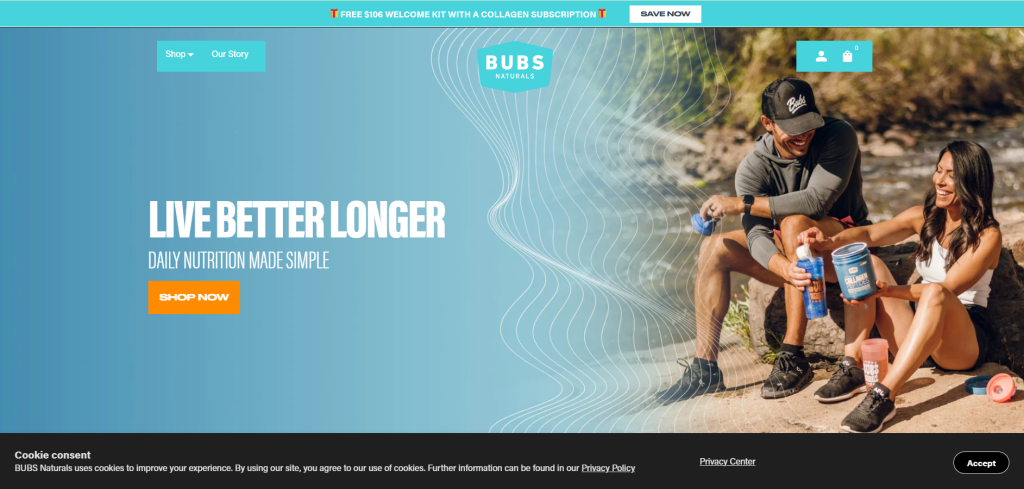
BUBS Naturals
The brand donates a portion of every sale to veteran charities, which gives customers a reason to buy that goes beyond the product itself. BUBS Naturals‘s one of the most genuine mission-driven supplement stores on Shopify.
Key Highlights:
- Mission-driven brand with a compelling founding story that builds emotional loyalty
- Used Shopify Audiences to triple ROAS and double conversion rates on paid ads
- NSF Certified, Whole30 approved, grass-fed sourcing across core products
- Subscription program with 25% discount and free shipping drives strong LTV
Traffic: ~150K–250K visits/month
Best for: Brands with a mission-driven identity looking to build loyalty beyond the product
Myprotein
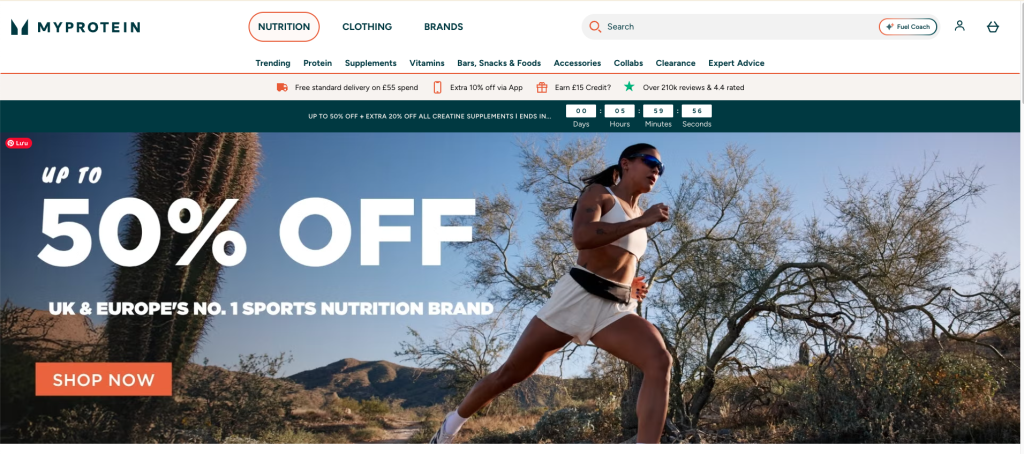
Myprotein has grown into one of the world’s largest direct-to-consumer nutrition brands, serving customers across more than 70 countries through a highly optimized Shopify-powered ecommerce experience. The company combines an enormous supplement catalog with subscriptions, loyalty rewards, and personalized offers, creating a retention engine that keeps customers coming back long after their first purchase.
Key Highlights:
- One of the largest sports nutrition brands operating on Shopify
- Extensive catalog covering protein powders, vitamins, amino acids, creatine, and performance supplements
- Strong subscription and loyalty ecosystem designed to increase repeat purchases
- Global ecommerce presence with localized storefronts and international shipping
- Consistently high organic traffic driven by content marketing and brand recognition
Traffic: ~4M–6M visits/month
Best for: Brands focused on scaling subscriptions, retention, and international ecommerce
What Makes a Successful Shopify Supplement Store?
After studying dozens of supplement brands on Shopify, I’ve noticed the gap between a store that sells and one that truly scales rarely comes down to the product. It comes down to the experience. Here’s what I consistently see in the brands that win.
Trust-Building Product Pages
Supplement shoppers are skeptical by default. They don’t trust ads, they trust proof.
The best-performing stores I’ve seen treat product pages like mini landing pages, not spec sheets. The non-negotiables:
- Benefit-first headline: Lead with what it does for the customer, not what it is
- Ingredient transparency: Full breakdown of dosage, sourcing, and formulation
- Third-party certifications: NSF, Informed Sport, USP, visible above the fold
- CoA links: Let customers verify quality themselves
- Research references: Cite studies where relevant
Subscription and Reorder Features
Supplements are a daily habit, which means repeat purchases are built into the product cycle. The problem is if your store doesn’t make reordering frictionless, customers forget, or buy from someone else.
What the top brands do:
- Offer 15–20% subscribe-and-save discounts as the default option
- Give customers full self-serve control over their subscription portal
- Send reorder reminders via email or SMS before customers run out
Customer Reviews and Social Proof
No marketing copy converts better than a real review from a real customer. In supplements, where claims are easy to make and hard to believe, social proof is part of the funnel, not decoration.
The difference I see in top stores:
- Star ratings placed directly under the product title, no scrolling required
- Photo and video reviews prioritized over text-only testimonials
- Reviews filtered by use case so shoppers find relevant feedback fast
- Q&A sections that handle objections before customers need to ask
Educational Content and Wellness Resources
Customers who understand a product buy more of it, stay longer, and refer others. AG1 is the clearest proof: their educational content library turns first-time visitors into long-term believers. People don’t just buy AG1, they buy into the philosophy behind it.
A solid content hub for a supplement store typically includes:
- Ingredient guides breaking down the science behind key compounds
- Dosage and timing recommendations for each product
- Lifestyle content connecting supplements to diet and training
- FAQs that preemptively handle common objections
Protect Your Shopify Supplement Store with Blockify
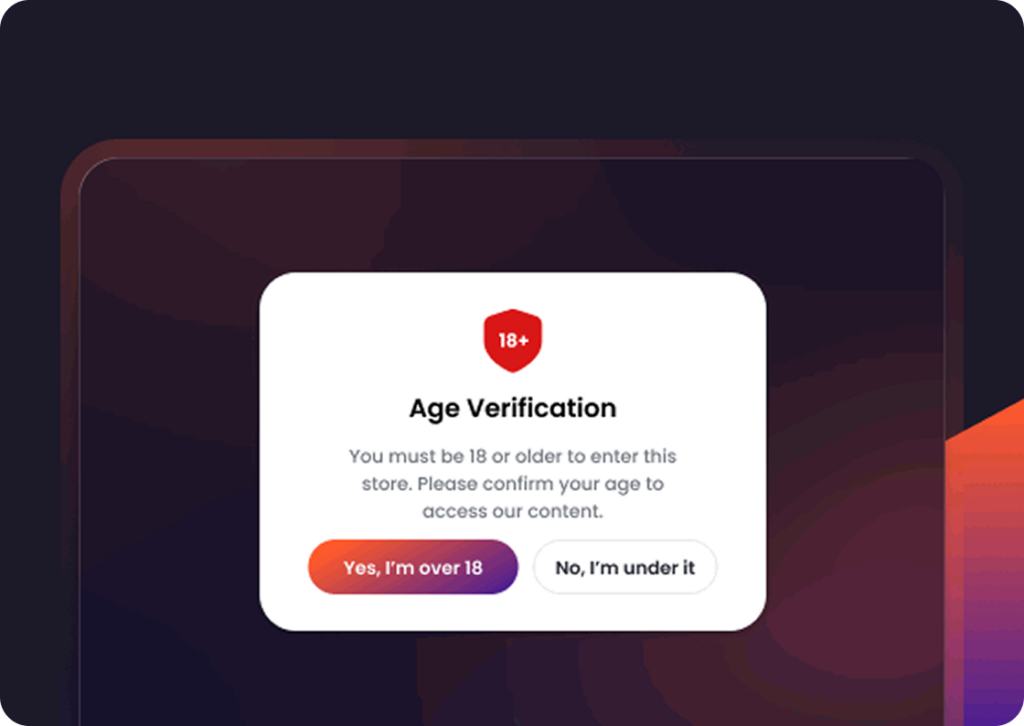
As supplement brands scale, compliance and conversion optimization become increasingly important. For stores selling age-sensitive wellness products or supplements with regional restrictions, Blockify Age Verification helps verify customer age before purchase, restrict access to selected products, and support compliance requirements without adding friction to the buying experience.
How to Build a Shopify Supplement Store That Converts
Starting a supplement store on Shopify is easy. Building one that actually converts and grows is a different challenge.
Optimize the Checkout Experience with Blockify
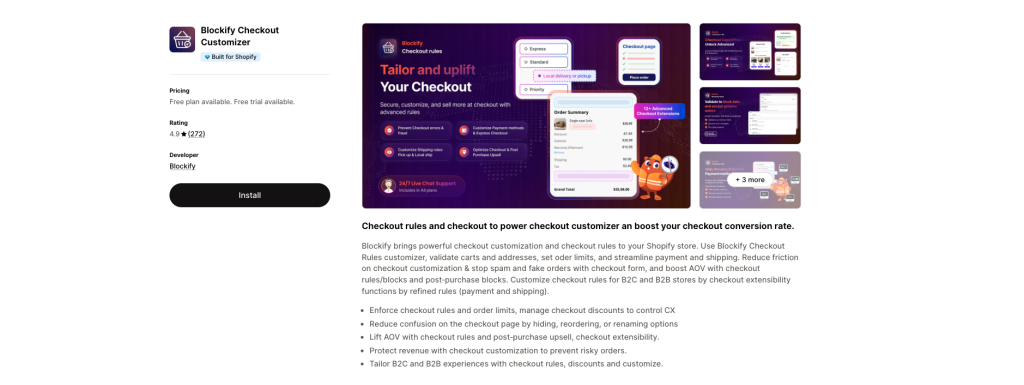
At checkout, Blockify Checkout Customizer helps merchants streamline the purchase process by validating orders, managing payment methods, and reducing checkout issues that can lead to abandoned carts. Together, these tools help supplement brands maintain compliance, improve the customer experience, and maximize conversion opportunities.
Choose a Clear Product Niche
The biggest mistake I see new supplement stores make is trying to sell everything to everyone. A generic health store has no clear message and no real reason for anyone to choose it over Amazon.
The brands that break through fast pick a lane and own it, by audience (women over 40, endurance athletes), by goal (sleep, gut health, recovery), or by value proposition (clean label, clinically dosed, fully transparent). Ritual built their brand around ingredient transparency for women.
Create Compliance-Friendly Product Descriptions
Supplement copywriting has a landmine most new store owners don’t see coming: health claims.
The FDA draws a clear line between what’s allowed and what isn’t. “Supports healthy joints” is fine. “Treats arthritis” is not. Get this wrong and you risk ad disapprovals or account suspension. The practical rules:
- Use “supports,” “promotes,” “helps maintain”, never “treats,” “cures,” or “prevents”
- Always include the standard FDA disclaimer
- Back benefit claims with ingredient science, not outcome promises
Use Fraud Prevention Tools to Clean Your Traffic
Not all traffic is equally valuable. For supplement stores, low-quality visitors, bots, and competitor monitoring can distort analytics, inflate ad costs, and make it harder to identify what truly drives conversions.
By filtering unwanted traffic, merchants can gain cleaner data and focus on attracting legitimate buyers who are more likely to complete a purchase.
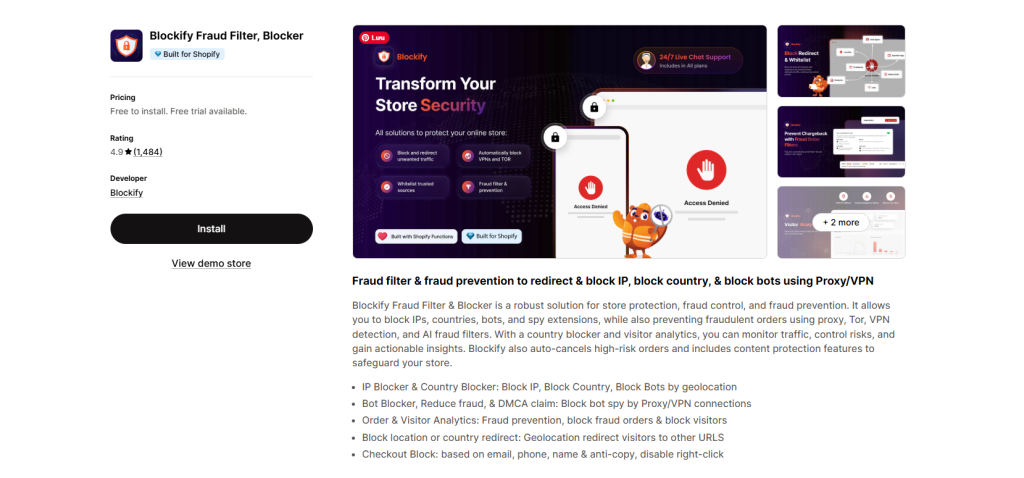
Blockify Fraud Filter helps Shopify merchants control who can access their store:
- Block by location: Restrict traffic from regions that don’t match your target market
- Block by IP: Prevent repeated visits from suspicious users or known bad actors
- Block bots and crawlers: Stop automated traffic that can skew analytics and consume resources
- Create redirect rules: Send unwanted visitors away from key landing pages
Optimize for Repeat Purchases
A supplement store that only sells once isn’t a business, it’s an expensive hobby. The math is simple: acquiring a new customer costs 5–7x more than keeping an existing one.
Present subscribe-and-save as the default checkout option, not the alternative. Automate a replenishment email 25–30 days post-purchase
Focus on Customer Retention and Loyalty
Acquisition gets you customers. Retention builds a brand.
The supplement stores with the strongest long-term growth treat post-purchase as the start of the relationship, not the end. In practice, this means VIP tiers that reward top spenders, win-back sequences for lapsed subscribers, and personalized reorder flows based on purchase history.
Build a Mobile-First Shopping Experience
More than half of supplement purchases now happen on mobile devices. If your store feels slow, cluttered, or difficult to navigate on a phone, potential customers will leave before they ever reach checkout.
Keep navigation simple, make product benefits visible above the fold, and use clear call-to-action buttons throughout the buying journey. Product pages should load quickly and make it easy to compare ingredients, serving sizes, and subscription options without excessive scrolling.
Educate Customers Before Asking for the Sale
Most supplement shoppers don’t buy based on brand names alone. They want to understand what an ingredient does, why it works, and whether it’s right for their goals.
Successful supplement brands use educational content to answer these questions before customers ask them. Ingredient breakdowns, comparison guides, FAQs, usage instructions, and science-backed blog content help build trust and reduce purchase hesitation.
Streamline the Checkout Process
Even highly interested customers can abandon their carts if checkout feels complicated. Every additional field, unnecessary step, or surprise fee creates friction that reduces conversion rates.
Keep checkout simple, offer multiple payment methods, and highlight subscription savings where appropriate. Many successful supplement brands also use one-click upsells, bundle offers, and post-purchase promotions to increase average order value without disrupting the buying experience.
FAQs About Shopify Supplement Stores
Is Shopify good for selling supplements?
Yes. Shopify supports subscription selling, integrates with major compliance and fulfillment tools, and has a large app ecosystem built for health and wellness brands. It’s the platform most top supplement brands run on for good reason.
How do supplement brands increase repeat purchases?
Subscriptions with meaningful discounts, automated replenishment emails, and loyalty programs are the three most effective levers. Post-purchase education that helps customers see real results also drives retention more than most brands expect.
What is the best Shopify theme for a supplement store?
Dawn, Prestige, and Impulse are the most proven choices. Dawn for speed and simplicity, Prestige for premium brands, Impulse for stores with strong visual identity and large product catalogs.
Conclusion
The supplement brands featured in this list share more in common than just Shopify. They lead with trust, build around subscriptions, and treat post-purchase as the start of the relationship, not the end.
The playbook isn’t complicated. Transparent product pages, a solid retention system, and educational content that turns buyers into believers. Most stores know what to do, they just underinvest in all three at once.
