
Shopify Scams: Common Fraud Schemes and How to Stay Safe

Shopify powers millions of online stores worldwide, but its popularity also attracts scammers looking to exploit shoppers and merchants. From fake stores and phishing emails to chargeback fraud and impersonation schemes, Shopify scams can take many forms.
| What you’ll learn in this article: ● What Is a Shopify Scam? ● Common Shopify Scams You Should Know ● How to Identify a Shopify Scam ● What to Do If You Encounter a Shopify Scam ● How to Protect Yourself From Shopify Scams |
What Is a Shopify Scam?
Shopify is a legitimate and widely trusted eCommerce platform, powering millions of businesses across 175+ countries. It provides the infrastructure for merchants to build and run online stores, but it does not vet every seller on its platform.
A Shopify scam is any fraudulent scheme that exploits Shopify to deceive buyers, sellers, or both. Scammers often set up fake storefronts, impersonate legitimate merchants, or manipulate the checkout process to steal money or personal information.
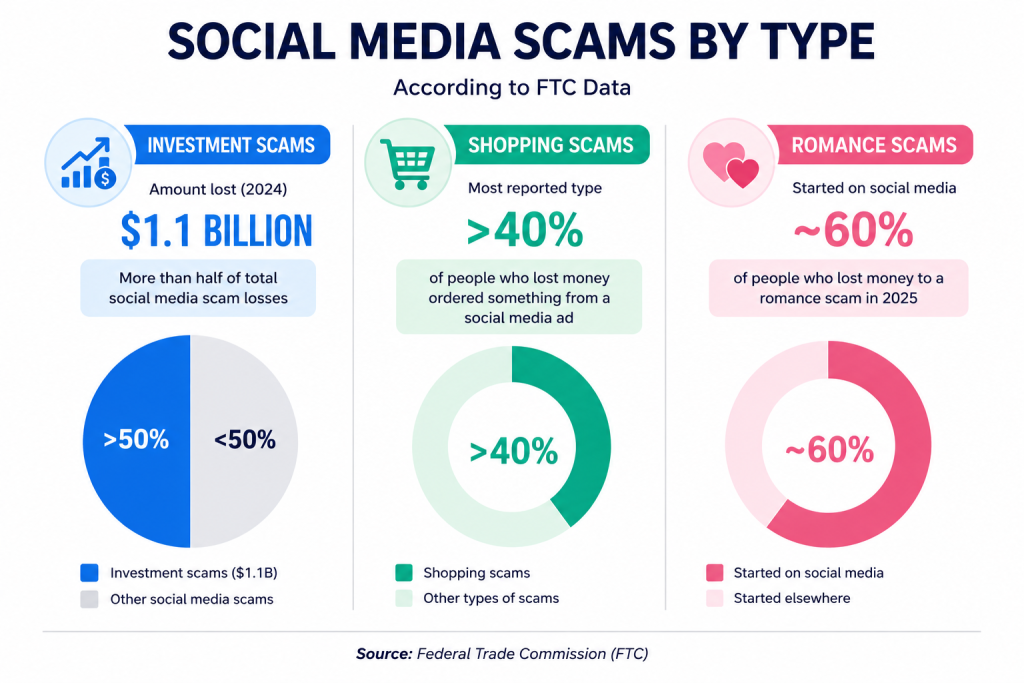
According to the FTC’s Data Book, online shopping fraud ranked as the second most commonly reported fraud category in the United States, and shopping scams were the most reported type of social media scam, with over 40% of victims ordering products they saw in a social media ad. Many of those fraudulent stores run on Shopify.
Common Shopify Scams You Should Know
Shopify scams come in many different forms, and each one targets a different vulnerability. Below are the most common types you need to watch out for.
Fake Shopify stores
Fake Shopify stores are fraudulent storefronts that scammers build on the Shopify platform to look like legitimate businesses. They typically offer popular products at heavily discounted prices, collect payments, and then either ship nothing at all or send cheap counterfeit items instead.
These stores usually share a few telltale signs:
- Prices that are unrealistically low compared to market value
- No verifiable physical address or working customer support
- A very recent domain creation date
- Stolen product images taken from real brands
- Payment methods that offer little buyer protection, such as wire transfer or cryptocurrency
Shopify scams email and phishing attacks
Phishing is one of the most widespread threats in ecommerce. According to the FBI IC3 2024 Internet Crime Report, phishing was the most-reported cybercrime in the United States, with 193,407 complaints filed and $70 million in direct losses.
In Shopify, scammers send emails impersonating Shopify support, order confirmations, or payment alerts to trick store owners into clicking malicious links and handing over their login credentials.
Common phishing tactics include:
- Fake “your store has been suspended” emails with urgent calls to action
- Counterfeit order confirmation emails sent to customers, redirecting them to fake payment pages
- Spoofed Shopify billing alerts asking merchants to “verify” their payment details
Store impersonation scams
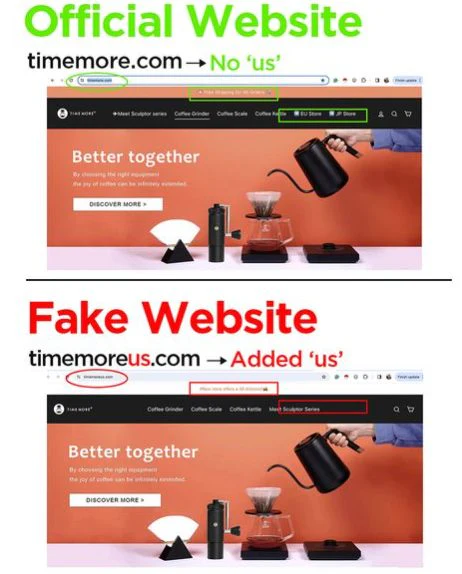
Store impersonation scams happen when scammers copy legitimate Shopify stores. They may replicate the store’s design, logo, product images, and even use a similar domain name to trick shoppers into thinking they are buying from the real brand.
These fake stores often appear in paid social media ads. At first glance, they can look nearly identical to authentic stores, making them difficult for shoppers to identify.
Fake order and chargeback scams
Chargeback fraud, also called friendly fraud, is a major and growing problem for Shopify merchants. In 2024, friendly fraud affected 45% of merchants worldwide, and chargebacks are projected to cost merchants over $100 billion in 2025, with 61% of disputes coming from friendly fraud.
In practice, this scam works in two ways:
- Fake orders using stolen cards: A scammer places an order using a stolen credit card. The real cardholder disputes the charge, and the merchant loses both the product and the payment.
- Buyer abuse: A legitimate customer receives the product but files a chargeback anyway, claiming the item never arrived or was not as described.
Fake Shopify apps and software scams
Scammers sometimes publish fake apps on or outside the Shopify App Store, presenting them as useful tools for store management, SEO, or analytics. Once installed, these apps can steal store data, inject malicious code into the checkout process, or charge hidden recurring fees.
Red flags to watch for include:
- Apps with very few reviews or suspiciously generic descriptions
- Requests for excessive permissions beyond what the app actually needs
- Apps promoted through unsolicited emails or third-party websites rather than the official App Store
Fake Shopify experts and agency scams
Scammers pose as Shopify developers, designers, or marketing consultants, offering their services at attractive prices. After collecting upfront payment, they either disappear entirely or deliver low-quality work copied from free templates.
These scams frequently target new store owners who are not yet familiar with standard market rates or how to vet a legitimate Shopify Partner.
Supplier and dropshipping scams
For Shopify merchants who run dropshipping businesses, fake suppliers are a serious risk. Scammers set up convincing wholesale or supplier websites, accept bulk orders, collect payment, and then ship nothing or send products of far lower quality than advertised.
Key warning signs include:
- Suppliers who only accept wire transfer or cryptocurrency
- No verifiable business registration or physical warehouse address
- Prices significantly below what other legitimate suppliers charge for the same product
How to Identify a Shopify Scam
Scammers often leave warning signs before they cause financial damage. Therefore, you should evaluate a store, email, or transaction carefully before taking action. A few minutes of verification can help you avoid losing money, account access, or customer data.
Red Flags for Online Shoppers
Many fraudulent Shopify stores rely on urgency and unrealistic offers to attract buyers. As a result, shoppers who rush through the purchasing process face a higher risk of being scammed.
Watch for these common warning signs:
- Prices that seem significantly lower than market rates
- Missing contact information or business details
- Poor grammar and spelling throughout the website
- Recently registered domains with little online presence
- No customer reviews or only generic five-star reviews
- Limited payment options that exclude buyer protection services
In addition, scammers often copy product images from legitimate brands. Reverse image searches can help you determine whether the products actually belong to the store.
Red Flags for Shopify Merchants
Fraud does not only target shoppers. Many scammers also target Shopify merchants through fake orders, phishing emails, and chargeback schemes.
Merchants should pay attention to suspicious activities such as:
- Large orders from first-time customers
- Multiple failed payment attempts before a successful purchase
- Billing and shipping addresses located in different countries
- Unusual spikes in order volume within a short period
- Requests to change shipping details after payment
- Emails requesting account credentials or verification codes
Furthermore, merchants should review high-risk orders before fulfillment. Manual review can prevent costly chargebacks and inventory losses.
How to Verify Whether a Shopify Store Is Legitimate
You do not need advanced technical skills to verify an online store. Instead, a few basic checks can reveal whether a business appears trustworthy.
Start with the following steps:
- Check the store’s contact page and company information
- Search for independent reviews on third-party platforms
- Review the store’s refund and shipping policies
- Verify the domain age through a WHOIS lookup tool
- Confirm whether the brand has active social media profiles
- Look for secure checkout pages that use HTTPS
Additionally, search the store name together with terms like “scam,” “review,” or “complaint.” Customer experiences often reveal issues that are not visible on the website itself.

What to Do If You Encounter a Shopify Scam
Quick action can reduce financial losses and improve the chances of recovering your account or funds. Therefore, you should respond immediately after identifying suspicious activity.
For Customers
Customers should gather evidence before contacting payment providers or support teams. Documentation can strengthen refund and dispute requests.
Take these actions as soon as possible:
- Save receipts, emails, and order confirmations
- Contact the seller and request clarification
- Open a dispute with your payment provider if necessary
- Monitor bank and credit card activity for unauthorized charges
- Change passwords if you shared login credentials
Meanwhile, avoid making additional purchases from the same store until the issue is resolved.
For Shopify Store Owners
Store owners should focus on containing the threat and protecting business assets. Fast responses can prevent further damage.
Consider the following steps:
- Suspend suspicious orders before shipping products
- Review recent account activity and login history
- Change passwords and enable two-factor authentication
- Remove unauthorized staff accounts or app permissions
- Contact Shopify Support if account security is affected
Moreover, merchants should document every incident. Detailed records can support investigations and chargeback disputes.
How to Report a Fraudulent Shopify Store
Reporting fraudulent activity helps protect other users from similar scams. It also increases the likelihood of enforcement actions against bad actors.
You can report a suspicious store by:
- Submitting a report through Shopify’s abuse reporting channels
- Contacting consumer protection agencies in your region
- Reporting fraudulent advertisements on social media platforms
- Filing a complaint with payment processors when applicable
Finally, include as much evidence as possible. Screenshots, transaction records, and communication logs can help investigators review the case more efficiently.
How to Protect Yourself From Shopify Scams
Shopify scams target both shoppers and merchants through a variety of tactics, from fake stores and phishing emails to fraudulent orders and malicious third-party services.
Follow Safe Shopping Practices
Safe shopping habits can help you avoid many common Shopify scams before they become a problem. Before placing an order, take time to research the store, compare prices, and review customer feedback from independent sources.
In addition, use payment methods that offer buyer protection whenever possible. You should also avoid clicking shopping links from unexpected emails or messages, as scammers often use these channels to direct victims to fake stores.
Secure Your Shopify Account
Strong account security reduces the risk of unauthorized access and data theft. Merchants should use unique passwords, enable two-factor authentication, and regularly review account activity for suspicious behavior.
Furthermore, store owners should limit account permissions to essential team members only. Regular security checks can help identify potential threats before they affect store operations or customer data.
Vet Apps, Suppliers, and Third-Party Partners Carefully
Not every app, supplier, or service provider operates with the same level of reliability. Before working with any third party, review their reputation, business information, and customer feedback from multiple sources.
Likewise, merchants should examine app permissions carefully before installation. Choosing trusted partners can reduce the risk of fraud, poor service, and unnecessary exposure to sensitive business information.
Use Fraud Prevention Tools and Monitoring Solutions
Fraud prevention tools can help merchants identify suspicious activities earlier. Features such as risk analysis, transaction monitoring, and order screening can reduce the likelihood of fraudulent purchases reaching fulfillment. Shopify’s built-in Fraud Analysis also helps merchants evaluate risk signals associated with individual orders before fulfillment.
Blockify Fraud Filter can help merchants automatically block suspicious IPs, VPN/proxy users, and high-risk visitors before they reach checkout, reducing chargeback risks without manual intervention. Unlike order-level Shopify fraud analysis, Blockify monitors both visitor traffic and order activity, helping merchants identify potential threats earlier in the customer journey and reduce the likelihood of fraudulent orders being created in the first place.
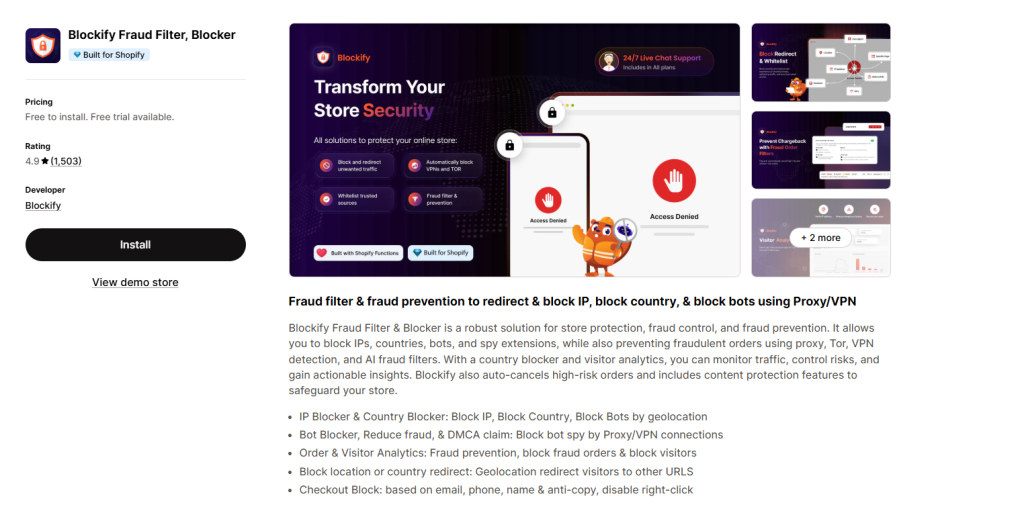
Key features include:
- IP and country blocking: restrict access from high-risk regions or known malicious addresses
- VPN and proxy detection: identify and block visitors masking their identity
- Bot protection: filter automated traffic and card-testing attacks before they reach your store
- High-risk order screening: automatically flag or cancel suspicious orders based on customizable rules
- Visitor analytics: monitor traffic patterns to spot unusual spikes or suspicious behavior early
FAQs About Shopify Scams
Are Shopify Stores Trustworthy?
Many Shopify stores operate legitimate businesses and provide reliable products and services. However, Shopify is an eCommerce platform rather than a retailer. Therefore, the trustworthiness of a store depends on the individual merchant.
What Are Shopify Scams Email Messages?
Shopify scam emails are fraudulent messages designed to steal personal information, login credentials, or payment details. These emails often imitate Shopify, suppliers, payment providers, or customer support teams to appear legitimate.
Can You Get a Refund After Being Scammed?
A refund may be possible depending on the payment method and circumstances. Customers should contact the seller first. If the issue remains unresolved, they can file a dispute with their credit card company, bank, or payment provider.
Does Shopify Remove Fraudulent Stores?
Yes. Shopify may investigate reports of fraudulent activity and take action against stores that violate its policies. Potential actions include account restrictions, store suspension, or permanent removal from the platform.
How Can Merchants Reduce Fraud Risks?
Merchants can reduce fraud risks by combining security measures with proactive monitoring. Strong passwords, two-factor authentication, order reviews, trusted partners, and fraud detection tools all help create a more secure eCommerce operation.
Putting It All Together
Most Shopify scams do not rely on sophisticated technology. Instead, scammers often take advantage of trust, urgency, and inattention. A fake store may look convincing, a phishing email may appear legitimate, and a fraudulent order may seem completely normal at first. For that reason, the best defense is not avoiding Shopify altogether. The smarter approach is knowing what deserves a second look.
