Shopify gaming stores have become a powerful way for gaming brands to sell products, build communities, and scale globally. From high-performance gear to collectibles and custom hardware, gaming brands are using Shopify to reach global audiences and handle massive demand.
| What you’ll learn in this article: ● Gaming Market Statistics ● Why Shopify Works Well for Gaming Stores ● Popular Types of Shopify Gaming Stores ● Top 10 Outstanding Shopify Gaming Stores ● What Makes a Great Gaming Shopify Store? |
Shopify is the top destination for gaming brands, thanks to its powerful infrastructure and versatile ecosystem that supports an effortless shopping experience for highly demanding gaming communities.
Globally, the online gaming market is enormous and still expanding. The industry was valued at over USD 225 billion in 2025 and is projected to nearly double by 2034, reaching around USD 501 billion as players continue to spend on games, hardware, and digital items.
That advantage shows up clearly in three core areas:
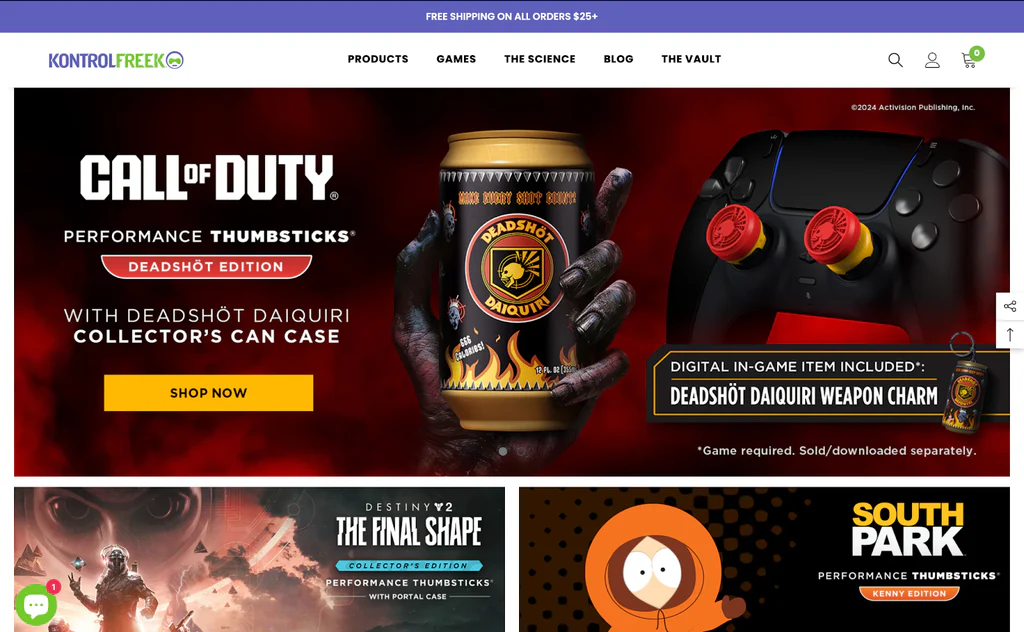
Shopify gaming stores often succeed by focusing on a specific segment of the gaming market. Below are the most popular types of Shopify gaming stores you’ll see today.
The most competitive segment, with brands targeting performance-driven hardware and an ergonomic feel.
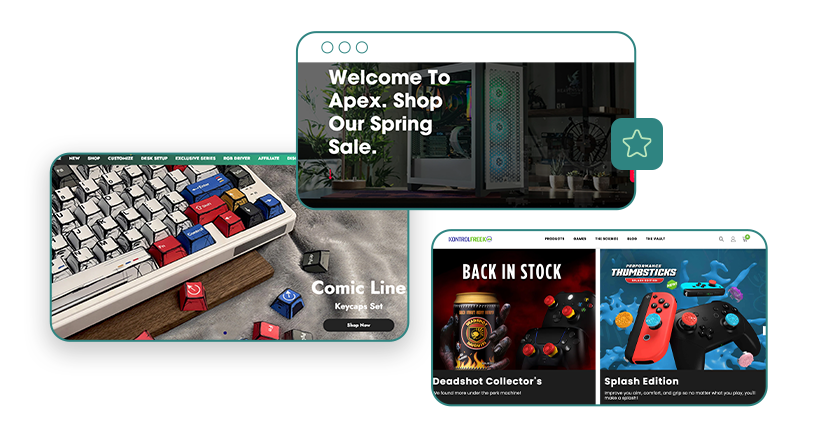
These stores focus on the lifestyle dimension of gaming, with an emphasis on aesthetics and customer loyalty.
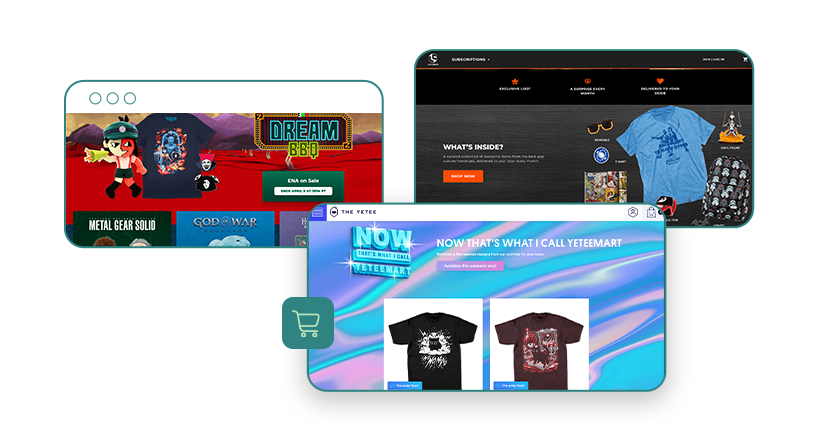
Though traditionally physical-first, it has also adapted to facilitate the fast delivery of virtual goods. Through digital delivery apps, sales can instantly send game keys or gift card codes to customers.
There are low overhead costs as well, as no inventory is created, no shipping is required, and the product can be delivered to the customers worldwide immediately. However, there is a greater risk of fraudulent chargebacks as well, along with the requirement of having third-party apps for the process.
| 💡 For gaming stores that trade in digital items or high-risk products, tools like Blockify Fraud Filter can be useful in automatically detecting suspicious activity and minimizing chargebacks without frustrating legitimate users. |
Before diving into each store, here’s a quick snapshot of some standout Shopify gaming stores so you can easily compare their scale, focus, and what makes them work. Estimates are derived from Similarweb, combined with observable brand scale and market positioning.
| Store | Category | Estimated Sales | Estimated Traffic |
|---|---|---|---|
| Glorious Gaming | Gaming peripherals | High 8-figure / year | Several million / month |
| KontrolFreek | Console accessories | Mid 7 > low 8-figure / year | High six figures > 1M / month |
| Fangamer | Gaming merchandise | Mid 7-figure / year | 1M+ / month |
| Arcade1Up | Arcade hardware | High 7-figure / year | Hundreds of thousands > 1M / month |
| Youtooz | Gaming collectibles | Mid > high 7-figure / year | 1M+ / month |
| HyperX | Gaming hardware | High 8-figure / year | Several million / month |
| Scuf Gaming | Custom controllers | High 7-figure / year | 1M+ / month |
| G FUEL | Gaming energy | High 8-figure / year | Several million / month |
| Secretlab | Gaming furniture | 9-figure / year | Millions / month |
| SteelSeries | Gaming peripherals | High 8-figure / year | Several million / month |
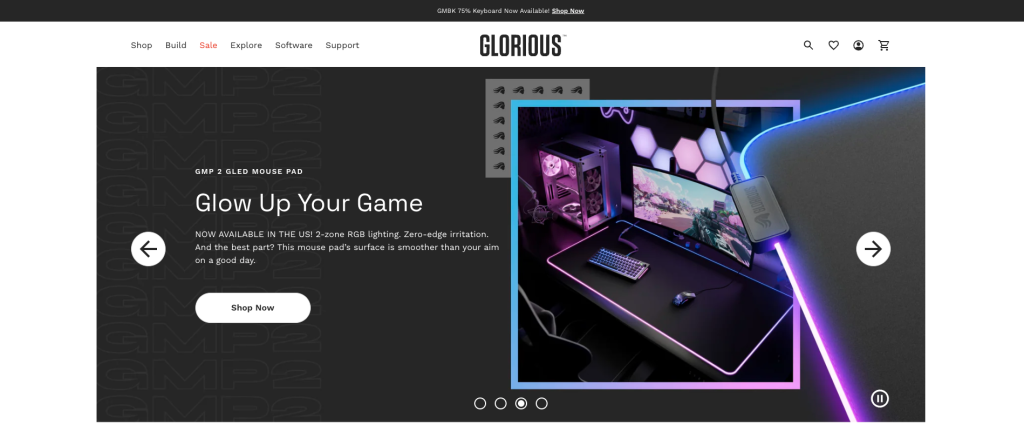
Glorious is one of the clearest examples of a Shopify gaming store built for scale. The brand positions itself around performance and competitive play, and the store experience reflects that focus. Product pages are clean, benefits are obvious, and the path to checkout is short, it’s exactly how high-AOV gaming gear should be sold.
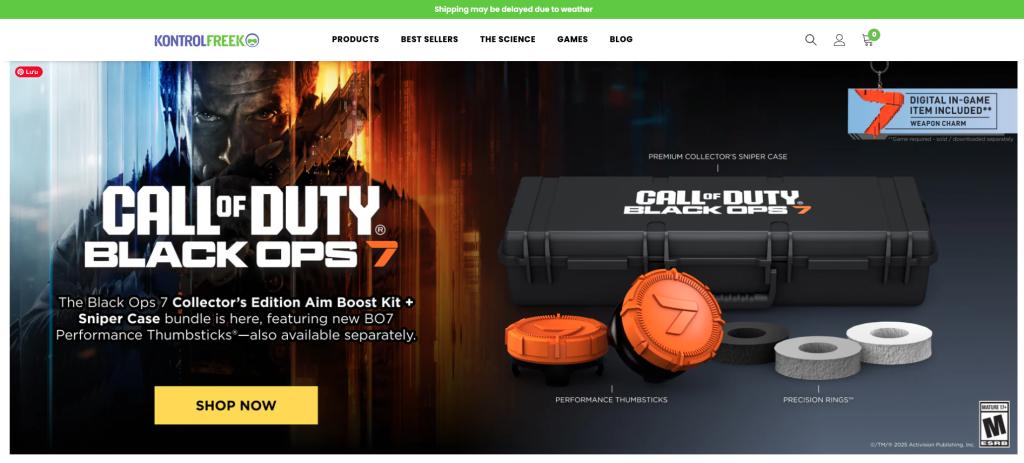
KontrolFreek works because it can do one thing very well. Rather than expand into many product categories, the store dominates a narrow niche and builds repeat demand around it. The site keeps choices simple and explains performance benefits clearly to remove unnecessary friction from the buying process.
In my opinion, that is a great example of how a focused gaming store can scale efficiently without needing a huge catalog.
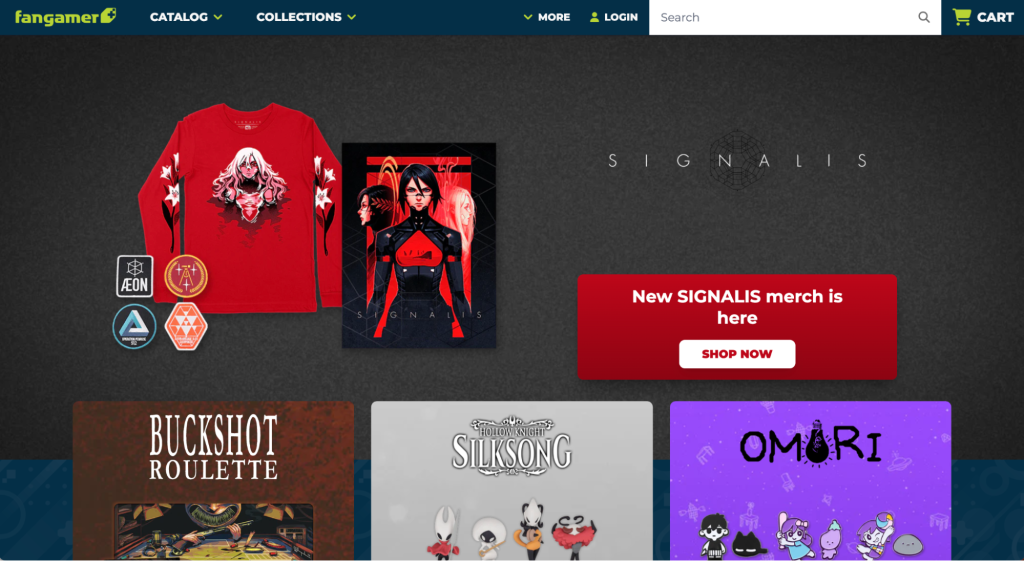
It’s different because it does not really sell gaming products, per se. Instead, it offers merchandise, dabbling with emotional connection and fandom-driven goodies for specific game communities. With Fangamer, it does not try to compete on price but rather uses storytelling, strong visuals, and brand trust.
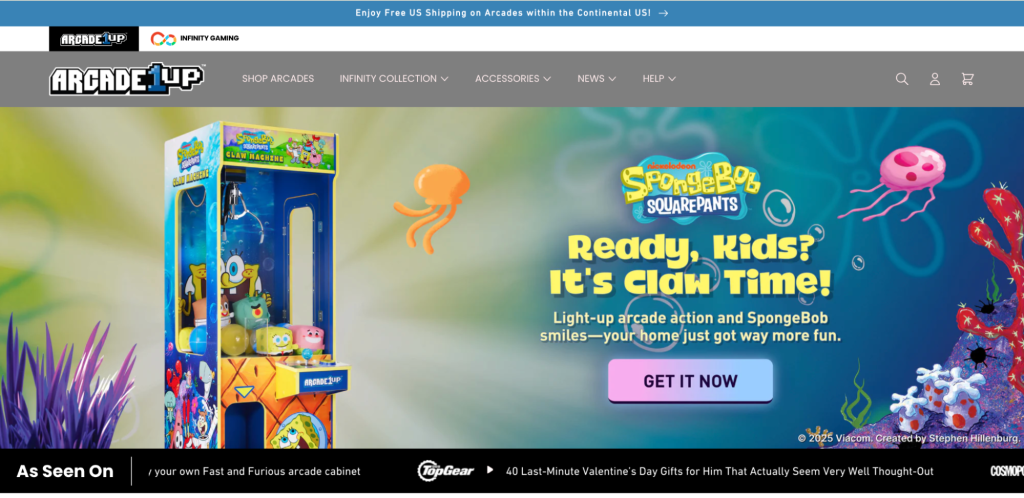
The online sale of full-size arcade consoles is difficult, but Arcade1Up has managed it by simplifying the online purchase experience. The store has done a great job of conveying the value of a product, which in turn reduces uncertainty for customers who want to make high-ticket purchases. It is clear, therefore, that a Shopify store can sell high-AOV, cumbersome items with a clear shopping experience in mind.
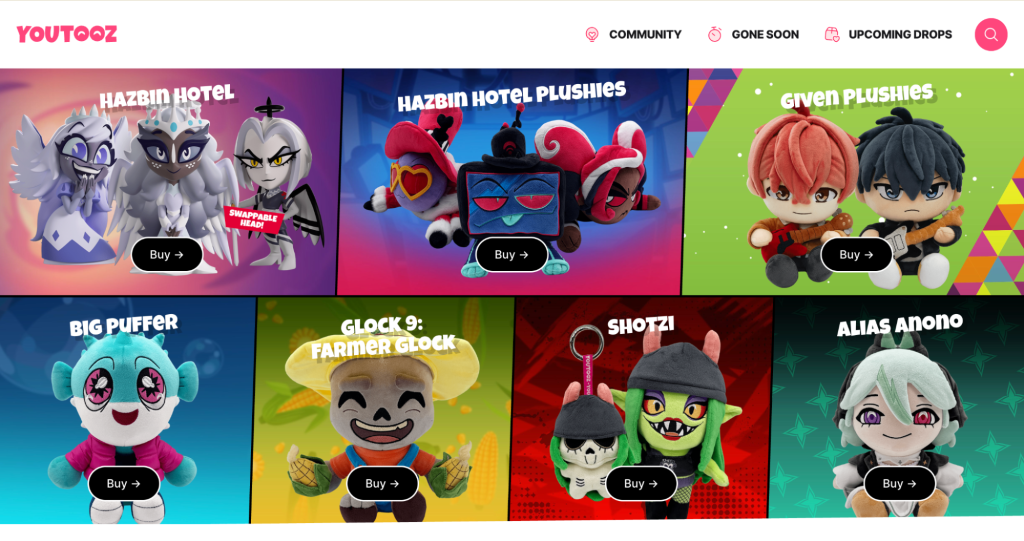
Youtooz‘s success is brought about through its mixture of gaming elements and drop-based commerce. Youtooz is not centered around its large product offerings but, rather, creates urgency through its drop-based commerce, centered around gaming, streamers, and internet culture. This is an exemplary case of how drop-based commerce and simplicity of product pages contribute to its demand without actually engaging in classic “sales” strategies.
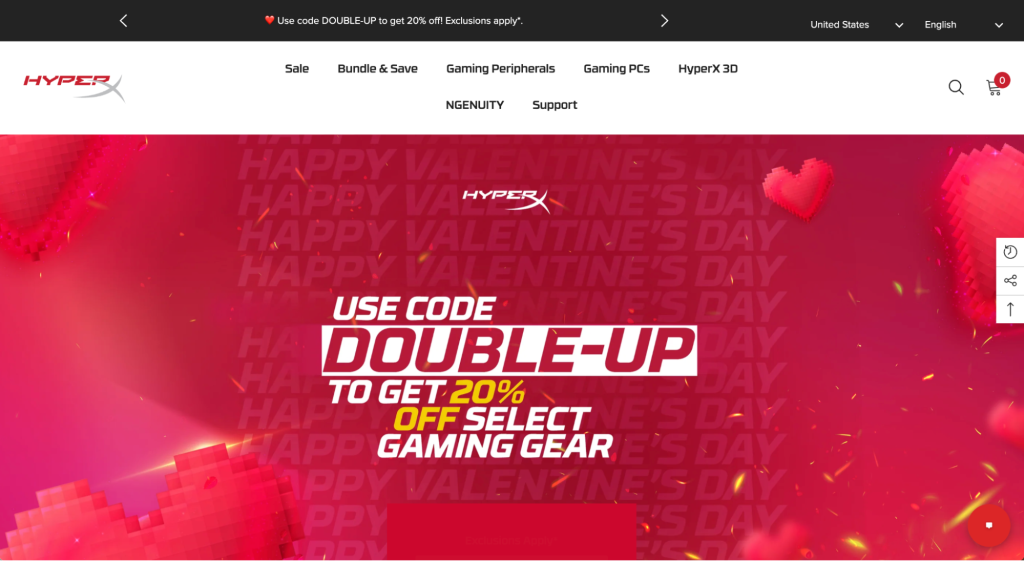
The store is optimized for clarity and speed, which is important for a store that is selling peripherals to competitive gamers. What is interesting about this example is the way that HyperX can present a broad range of products without sacrificing simplicity. HyperX shows that Shopify can comfortably support global traffic and high-volume launches without sacrificing conversion performance.
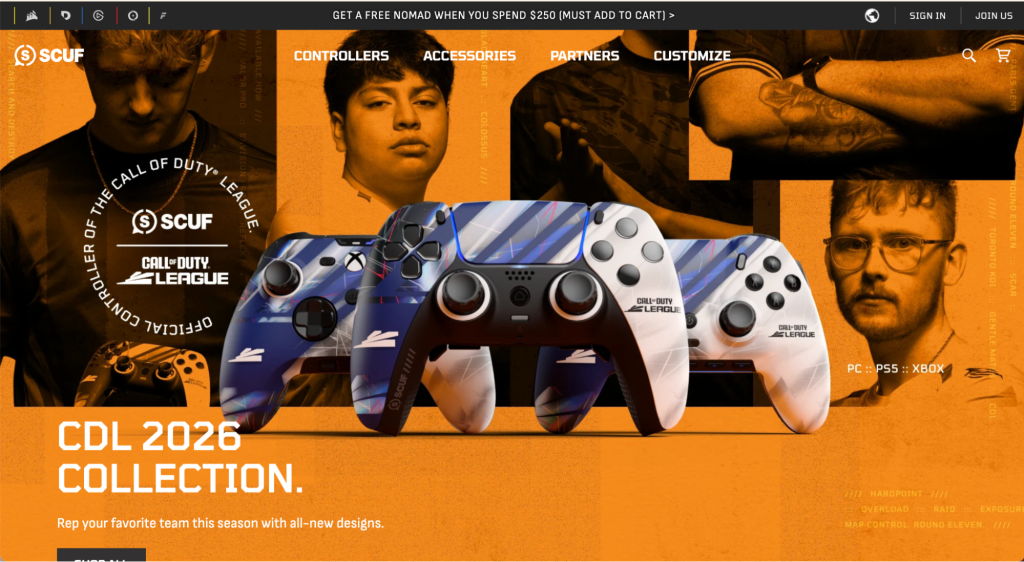
Scuf Gaming stands out because customization is the core product, not an add-on. The entire store experience is designed to guide users through building a controller that fits their playstyle, from layout to performance features. From my perspective, Scuf stands out because the customization flow actually feels natural.
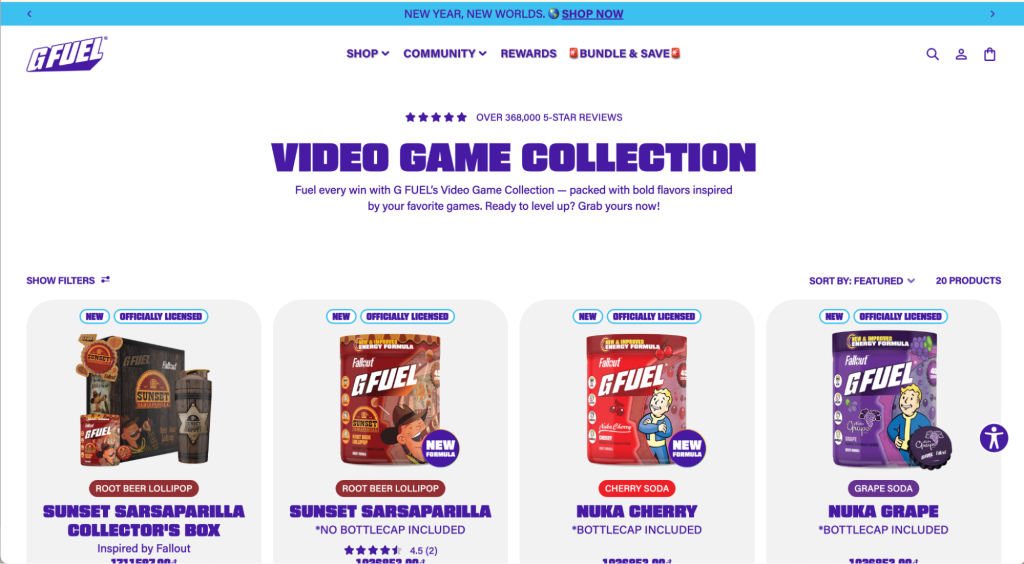
While a typical online store for traditional gaming gear, G FUEL has an entire focus shifted away from traditional gaming gear. Their product is, again, rather simple, but their store relies rather heavily on limited edition items and influencer demand. What strikes me here is that, despite constant launches and traffic surges, the store itself is well-managed.
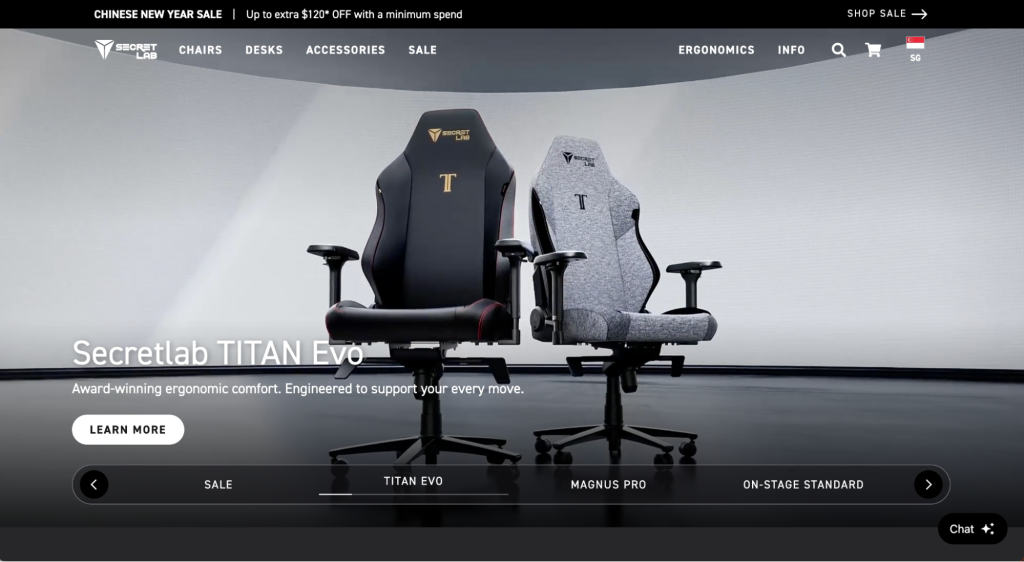
In comparison to a typical gaming shop, Secretlab has a drastically different approach. It’s not about speed or impulsive buying; instead, trust and justification for a premium product purchase are prioritized through lengthy product pages featuring comprehensive product specifications and social proof to eliminate every customer concern prior to a product purchase.
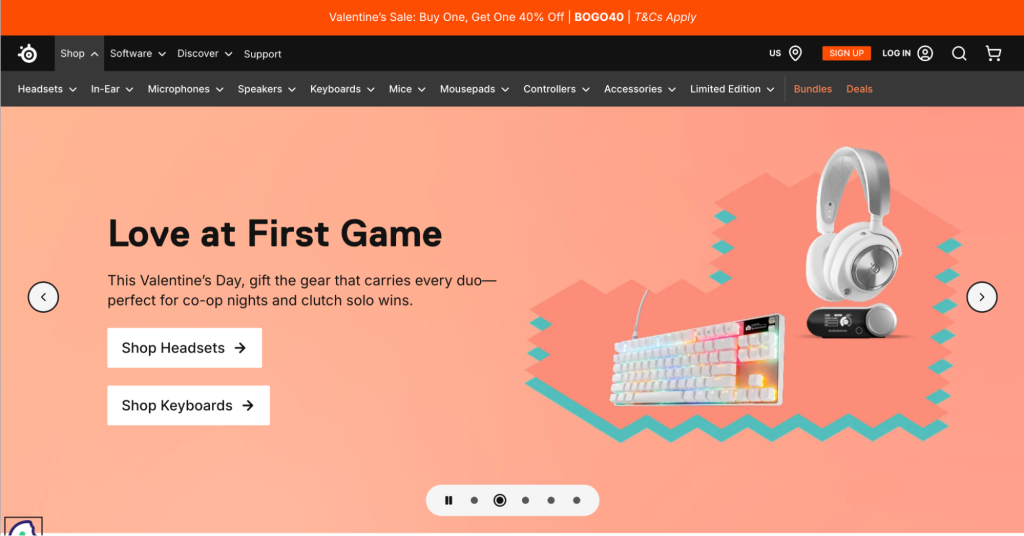
SteelSeries might look more like a global hardware company than a typical Shopify site at first glance, but that’s exactly why it’s a good example to use. The site needs to deal with a large product count, international visitors, and constant product changes while providing a clear structure and seamless checkout.
The best gaming Shopify stores go beyond selling products. They combine design, functionality, and community to create experiences that gamers want to be part of.
Top gaming Shopify stores tend to emphasize aesthetic designs related to gaming culture, which include dark mode and high contrast designs with creative layouts. High-quality videos and social media are helpful in showcasing products in a real gameplay context.
Since the largest demographic for gamers is mobile shoppers, performance is important. Having fast load speeds and a mobile-friendly design will help gain impulse purchases quickly.
Gaming store sites often need more sophisticated functionality compared to standard eCommerce sites. In cases where hardware releases are limited, sites need robust pre-order functionality in preparation for surges in traffic.
Some online shops sell virtual items or even allow customers to customize their items with the help of automated services that include tools like instant key delivery and product builders.
Gaming is a very social platform, and a large store is an integral part of that. This is done via gamified loyalty programs where individuals receive incentives for their involvement, as well as pathways to community locations such as Discord and Twitch. More sophisticated brands are using customer data to tailor the experience, providing product recommendations based on platform or genre preferences to convert the consumer into a fan.
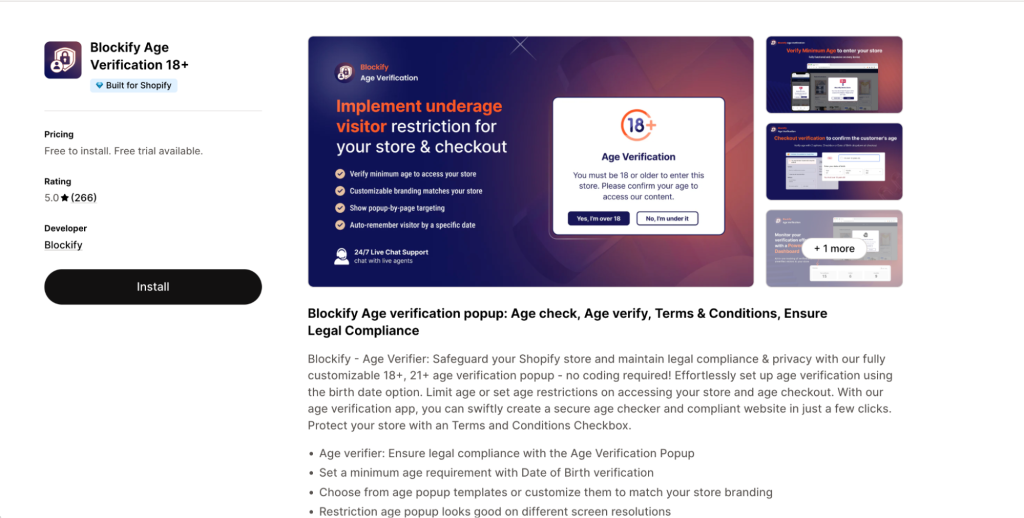
With the growing international expansion, it is important that a store complies with all the legal requirements, especially on products related to 18+ games, violence, or mature themes. Most regions will have a compliance issue or penalties on the platforms for selling gaming products that are age-restricted without checks.
Better-built gaming Shopify stores manage this by introducing age-gating around pivotal entry points so that only eligible users are allowed through to restricted products or collections. Tools such as Blockify Age Verification enable shops to apply these checks without interrupting the user journey, providing brands with a compliant yet seamless and trusted user experience.
Final thoughts
The most successful Shopify gaming stores use positioning, performance-based design, and scaling potential to stand out from the pack. While they may offer anything from gaming peripherals to custom gaming rigs to collectors’ items, they prove that the secret to Shopify gaming stores is not a specific secret at all, but rather doing the basics well.