Online age verification is increasingly shaping how websites manage access in today’s digital environment. The whole process of the online platforms, along with the tightening of the regulations, has made confirming user age a foremost matter for companies that deal with sensitive or highly regulated industries.
| In this article, you’ll learn: ● What is Online Age Verification? ● How the Online Age Verification Process Typically Works ● Common Online Age Verification Methods ● Best Practices for Implementing Age Verification Online ● Simplify Age Verification on Shopify |
Online age verification is a reliable way to secure kids’ and teens’ access to age-restricted content, products, and services. By data-driven, such as age checkboxes, these systems express a reliable method of verifying age over self-reported information through different stages.
It happens by the collection of age-related data and the validation via various methods, such as ID checks, biometric estimation, and third-party verification. The ultimate goal is the same: to meet legal standards, keep minors away, and preserve trust while the user experience is made very smooth.
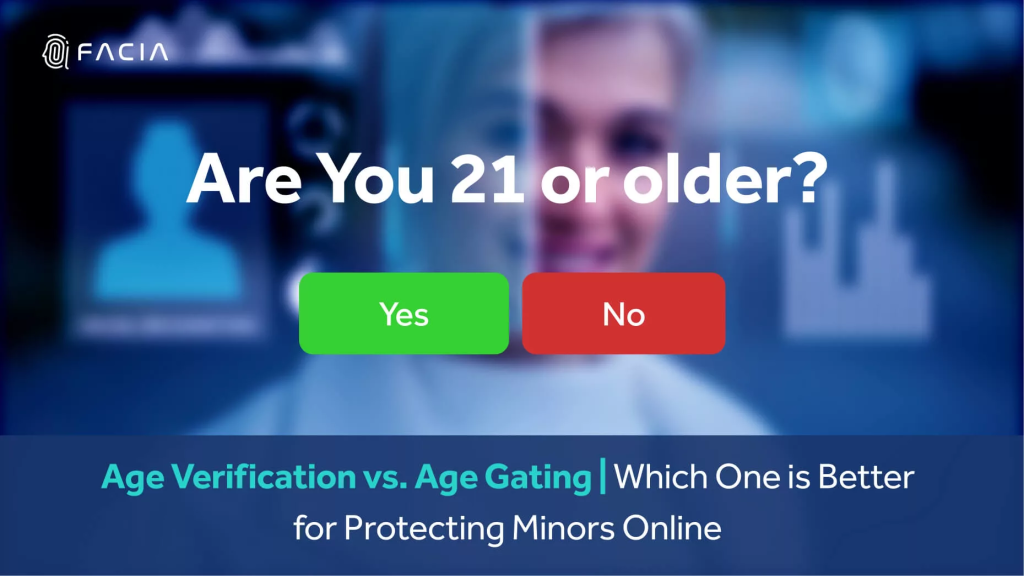
Age verification is required online to meet legal obligations, protect minors, and build trust on digital platforms. In the U.S., nearly all teens (97%) say they use the internet daily, which increases the likelihood of exposure to age-inappropriate spaces if safeguards are weak.
An online safety and data protection law that requires age verification for websites has been enacted in a number of countries worldwide. Such regulations apply mainly to adult content, gaming, alcohol, and financial services. In the UK, companies can be fined up to £18 million or 10% of qualifying worldwide revenue (whichever is greater).
As a result, age verification helps businesses avoid legal penalties and regulatory risks. It also shows that the platform takes compliance seriously rather than treating it as a checkbox exercise.
Age verification has its sole purpose of preventing kids and teenagers from seeing any content that isn’t suitable for their age group. This consists of materials with explicit language, gambling, or the sale of age-restricted products.
By putting verification in place, platforms reduce exposure risks and create a safer online environment. Over time, this protection becomes a core part of responsible digital design.
Implementing an accurate age verification system indicates that the respective website places a priority on user safety and moral values. Users are more likely to build trust with platforms that have a clear and strict control system in place to regulate access to sensitive areas during the establishment period, which is crucial for a trusted brand image. This can lead to improved long-term user loyalty.
Done correctly, the system protects not only the audience but also the business behind the platform, since child safety and privacy enforcement can carry major financial consequences (for example, a $10 million civil penalty approved in late 2025 in a children’s privacy related case).

Online age verification usually follows a clear, standardized flow designed to confirm a user’s age while minimizing data exposure and friction.

Online age verification can be implemented in several ways, depending on the level of accuracy required, legal obligations, and the desired user experience.
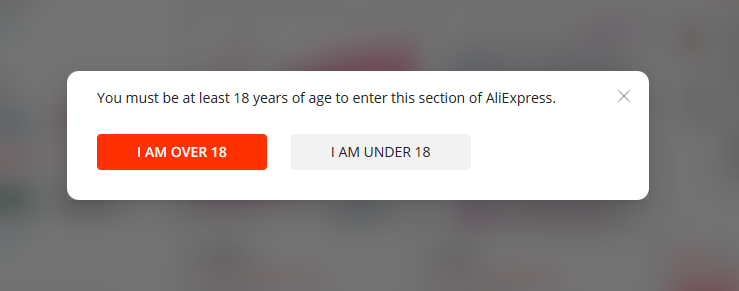
This is the simplest method, where users confirm their age by selecting a checkbox or clicking a prompt like “I am over 18” before accessing restricted content. It is widely used because it is fast, low-cost, and creates minimal friction in the user experience.
However, this method offers the lowest assurance because it relies entirely on honesty and can be easily bypassed. As a result, it is typically used only for low-risk content or as a first-step filter combined with stronger verification methods when compliance risk is high.
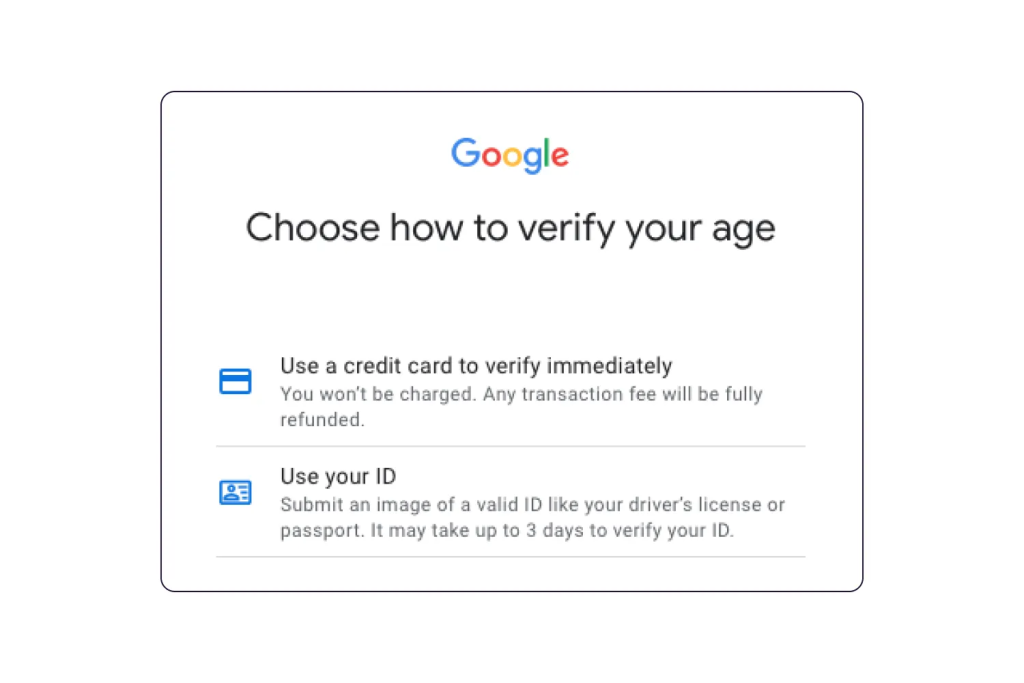
The users are asked to upload a photo of a government-issued ID, like a driver’s license or passport, that the system will process, and AI will extract the date of birth. This technique is very common for high-risk or content regulations where accuracy matters the most.
In most cases, a live selfie is also required to check liveness and to make sure the person presenting the ID is indeed its rightful owner. This leads to a decrease in fraud and guards against the use of stolen or altered documents.
This gets done through a method that applies AI algorithms to a real-time photo or video of the user and analyzes the facial features in order to estimate the user’s age without requesting any documents at all. It is often employed as an instant, low-friction screening route.
To account for margins of error, platforms usually apply age buffers, such as estimating a user as 23 to allow 18+ access. While convenient, it is less precise than document-based checks.
Users here input basic personal information such as name, address, and birth date, which are subsequently verified through reliable third-party databases. These may involve credit bureaus, utility records, or public registries.
This method eliminates the need for biometric data but is a prisoner of data availability and precision. It can be a problem for people with little or no digital or financial footprints.
Verifying with a credit card presumes the user is at least 18, sometimes along with a minor transaction to confirm the owner’s activity. This is the method often used in the case of e-commerce or subscription-based services.
Phone number verification by mobile network providers is done by checking whether the number has adult content restrictions or the registered account age is sufficient. These verifications are quick but differ from one area to another and among service providers.
Digital identity wallets make it possible for users to keep a verified identity in one place and use it on different platforms. One of the apps allows users to provide an anonymous “Over 18” proof without disclosing their entire identity.
This practice helps to avoid the upload of documents multiple times, and it also secures privacy. The method is already popular in some areas and is supported by the trend of regulations promoting data minimization.
With the help of open banking, users can give a verification service temporary access to confirm their age through their bank account directly. This process does not involve any documents or taking selfies.
The method guarantees high accuracy and safety, but it is dependent on user trust in sharing their financial data. Furthermore, it is also a matter of open banking availability in each region that determines the adoption of the method.
📊 At a glance, the table below compares common online age verification methods based on accuracy, user friction, and privacy:
| Verification Method | Accuracy | User Friction | Privacy Level | Best Used For |
|---|---|---|---|---|
| Government ID & Face Matching | Very high | High | Medium | Regulated or high-risk content |
| Age Gate Checkbox (Self-Declaration) | Low | Very low | Very high | Low-risk content, first-step gating before stronger checks |
| Facial Age Estimation | Medium | Low | High | Fast 18+ screening |
| Database Cross-Referencing | Medium–high | Medium | Medium–high | Returning users, low-biometric use |
| Credit Card / Mobile Checks | Medium | Low | Medium | E-commerce, subscriptions |
| Digital Identity Wallets | High | Low | Very high | Privacy-focused platforms |
| Open Banking | High | Medium | Medium | Financial or compliance-heavy services |
Some industries can get away with a simple “age gate” prompt, but these ones usually need stronger age checks because the legal and harm risks are higher:
Implementing age verification effectively requires balancing legal compliance, user privacy, and a smooth user experience.
Match the verification method to how sensitive your content is, rather than applying the same checks everywhere. A one-size-fits-all setup often hurts usability without adding real protection.
Low-risk platforms, such as general social media, can rely on AI age estimation or mobile network checks. High-risk services like gambling or alcohol sales should require government-issued IDs paired with biometric liveness checks.
Management of IDs and biometric data entails a scope of serious legal issues and security risks. To avoid such problems, the best method is to create systems that require the least personal data for their functioning.
Only store what is strictly necessary, such as an “over 18: yes/no” result. Using third-party providers allows you to avoid storing sensitive PII on your own servers.
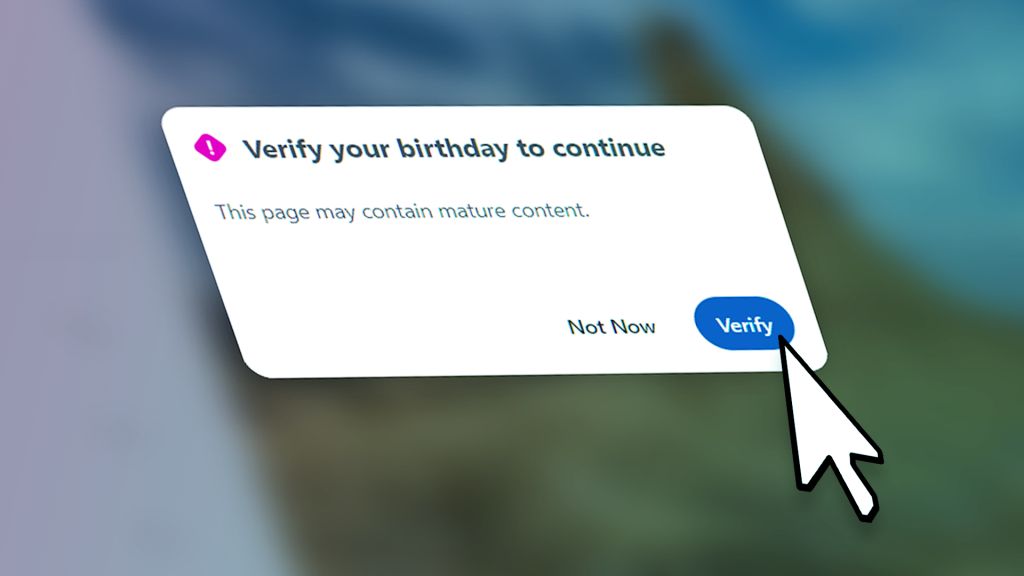
The process of age verification must be instant and automatic; otherwise, users will give up the whole thing. Just a few seconds longer can have a huge impact on the conversion rates.
For high-risk services, carry out the age verification at the moment of registration instead of later on. Giving users different verification options and making flows mobile camera-friendly are ways to help users perform the checks quickly and confidently.
Simple self-declaration prompts like clicking “I am 18” are easy to bypass, which makes them weak against manipulation and fraud. In higher-risk use cases, platforms often combine multiple checks to reduce spoofing and identity misuse.
Liveness detection is effective in preventing deepfakes and spoofing, while cross-referencing with the database verifies that the identities are indeed alive. Continuous monitoring can also spot suspicious behaviors, for instance, repeated chargebacks or conflicting age signals.
The age verification laws vary from one region to another and are constantly changing, thus making compliance an ongoing task. Companies need to keep an eye on both local and international regulations.
In Europe, it is the laws such as GDPR and the UK Online Safety Act that come into play. In the USA, COPPA is very influential, whereas worldwide standards such as ISO/IEC 27566-1 provide the direction for age assurance systems.
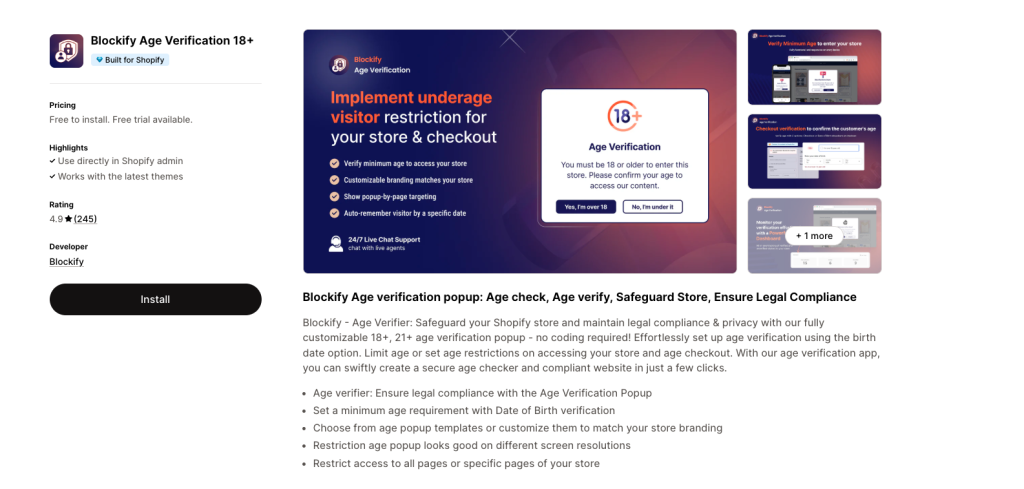
In case you are managing a Shopify or Wix store that requires age verification, Blockify provides a reliable solution that is especially made for retailers who want a quick setup without any technical difficulties. By using the Blockify Age Verification app, you can manage access to products and pages that are age-restricted while ensuring a seamless shopping experience.
Blockify allows you to use the strength of traditional age gates. Instead, it gives you the option to set customized age verification pop-ups according to the country, product type, or page rules. Thus, it will be very easy for you to remain compliant, prevent minors’ access, and do away with the hassle of legitimate customers.
Conclusion
Online age verification has become a necessary part of running compliant and responsible digital platforms. By choosing verification methods that match risk levels and prioritize user privacy, businesses can protect minors without creating unnecessary friction.
>>> Read More: How to Add Age Verification on Shopify: 3 Ways to Do It